

Twenty-five days separated Kathy Nolan’s two statements about New York City’s agreement to allow the building of renewables on its massive Catskills land portfolio.
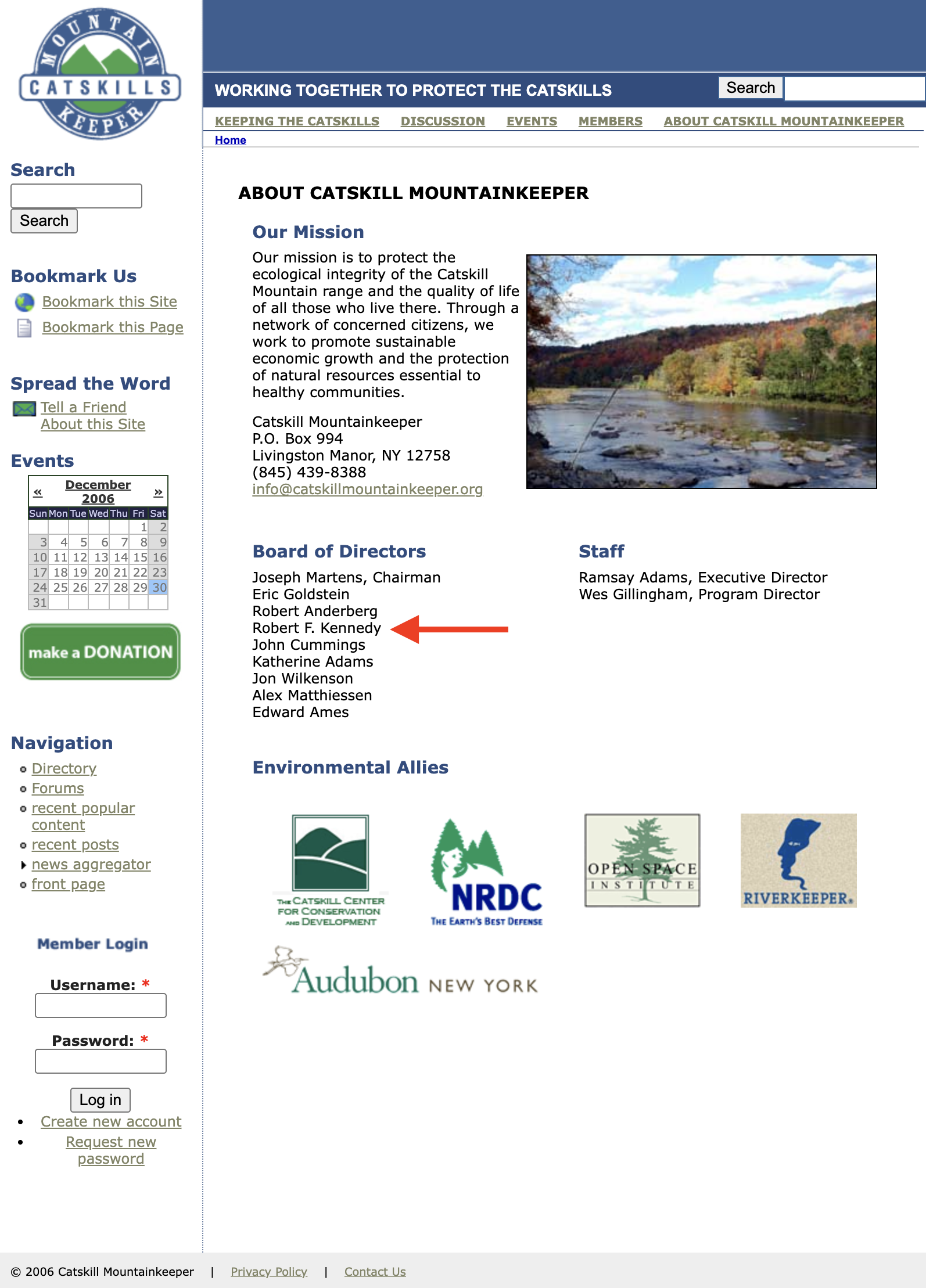
On March 21, the Ulster County legislator and Senior Research Director at Catskill Mountainkeeper stood at the Phoenicia Playhouse and defended the renewable pact to a room full of local residents who had come to see Unfiltered: New York’s Watershed Battle, a film about the history and future of the New York City watershed. Nolan was one of over a dozen people who came to challenge the assertions made by New York Energy Alliance in the film. The unifying theme of their comments was that the core premise of the project was misguided and represented some sort of nefarious, hidden agenda.
“You are attacking putting solar panels on New York City land when there are some reasons why that could make sense,” Nolan said. She continued:
You claim that the environmental groups were not involved. The environmental group that I worked with [Catskill Mountainkeeper] was involved, as was NRDC, Riverkeeper, land conservancies in the area. I think it’s 24 different environmental groups that signed a letter talking with the DEP about if they are going to do solar, how they would do it, how it could be done so that it would not affect UCIAs or build new roads or could it be done in a way that could be beneficial …
So the question for me is, your premise that having solar panels on some portion of New York City lands would be no good and would not bring jobs, I just don’t see that, because solar panels need tending as do solar panels that we put on our houses, and all of the renewable energy transition brings a lot of employment, much more than fossil fuel and nuclear, which I believe… at least one of you, has been involved in promoting. So if that’s your agenda, then state that.
Kathy Nolan, March 21 at Catskills Energy Future

Twenty-five days later, in a sworn affirmation filed in Queens County Supreme Court, Nolan told a different story. The agreement, she swore under penalty of perjury, would cause “immediate and irreparable injury” to her recreational, health, aesthetic and spiritual interests.
The renewable energy infrastructure that the agreement permitted, the same agreement her colleagues had supposedly helped shape, had been allowed without any environmental review, on lands “where those activities were previously prohibited.”
Her affirmation is the sole member declaration supporting an Article 78 lawsuit filed by Riverkeeper, one of the same twenty-four environmental groups Nolan had named as collaborators weeks prior.
The contradiction is hardly contained to Nolan; it’s been the modus operandi of Riverkeeper in the watershed for decades.
The Agreement to Build Renewables in the Catskills Watershed
The Fourth Supplemental Side Agreement was signed on November 25, 2025 in Delhi by DEP Commissioner Rohit Aggarwala, Delaware County Board Chair Tina Molé, and representatives of the Catskill Watershed Corporation and the Coalition of Watershed Towns. Aggarwala called the moment “a maturing of the way we work together.” Molé alluded to “a new administration in New York City, and along with it, some uncertainty, making this renewed commitment to our partnership even more important.”

The agreement modifies conservation easements on close to 100,000 city-owned acres of Catskills watershed land and opens them for the first time to renewable energy generation, storage and transmission infrastructure, sand, stone and gravel extraction, and new roads.
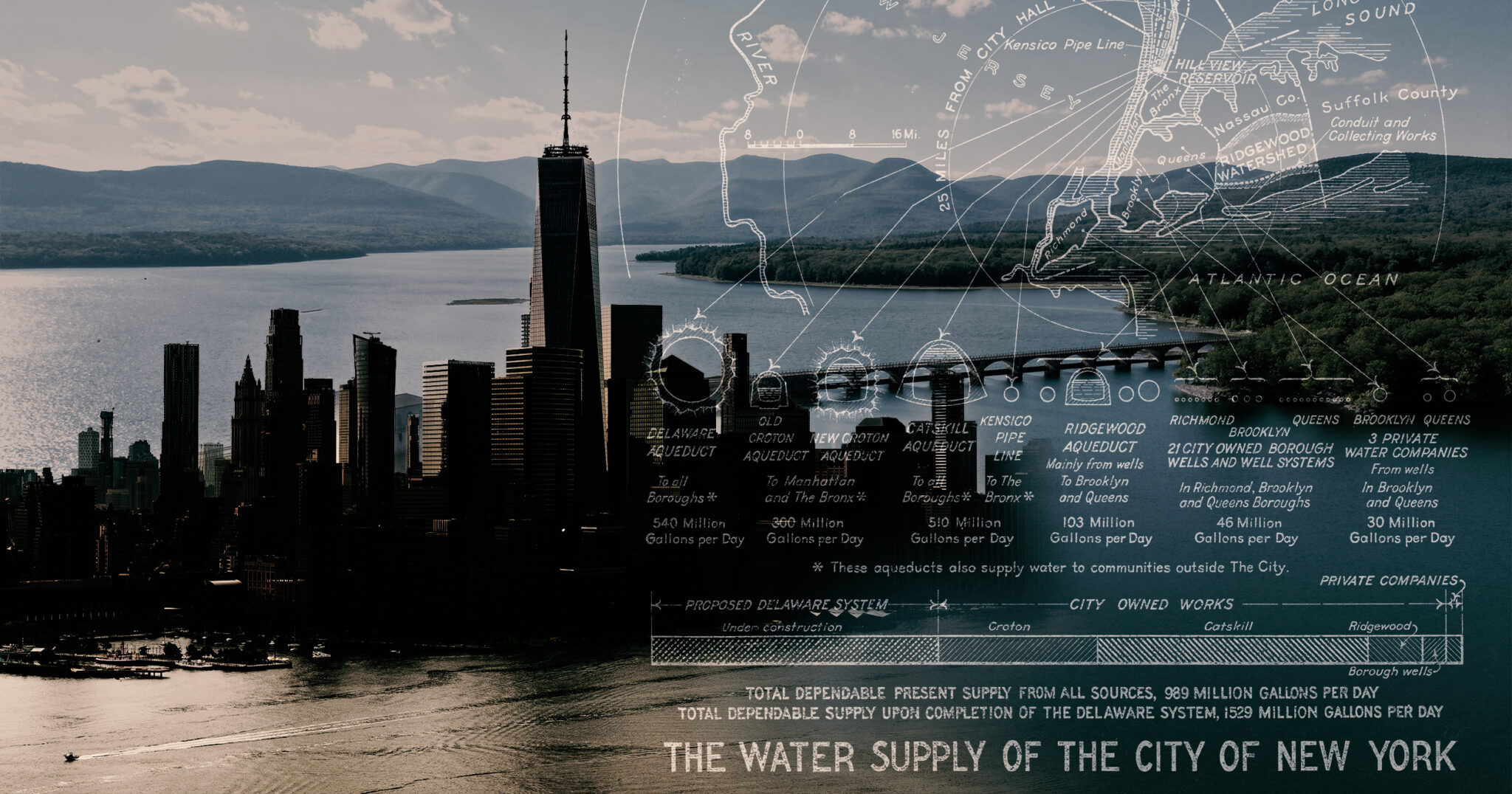
Within days of signing, Aggarwala hired McKinsey & Company (his former employer) to conduct a private economic study of the watershed without telling anyone. Within four months, the study was hit with a FOIL request from the watershed’s own oversight body, the underlying agreement was the subject of an Article 78 lawsuit, and Riverkeeper, which has spent months prior as one of “24 environmental groups” working with the DEP on the renewable energy framework, repositioned itself as the agreement’s main legal opponent.
Riverkeeper’s Latest Lawsuit
The lawsuit, filed in Queens County Supreme Court by the Pace Environmental Litigation Clinic on Riverkeeper’s behalf, makes four claims.
It alleges that DEP breached the 1997 New York City Watershed Memorandum of Agreement by changing the purpose of conservation easements on city-owned watershed land from water quality protection to a framework that now incorporates economic development and allows renewable energy infrastructure.
Any one of these [utility infrastructure, renewable energy generation, battery storage facility] operations could have impacts, and certainly the cumulative impact of these actions across 96,000 acres in a relatively rural area will have an enormous impact.
Michael Dulong, Esq., Legal Program Director at Riverkeeper
It alleges DEP violated the MOA’s requirement that acquired lands be “held in perpetuity in an undeveloped state.” It alleges DEP illegally restricted the Streamside Acquisition Program in ways that conflict with the 2010 Water Supply Permit. And it alleges DEP signed the agreement without completing any review under the State Environmental Quality Review Act.
Riverkeeper is asking the court to void the entire Fourth Supplemental Side Agreement and require DEP to conduct proper environmental review before entering any similar future agreement.
The lawsuit’s claim of “immediate and irreparable injury,” the legal predicate that anchors Riverkeeper’s standing, rests entirely on a single member affirmation, filed by Kathy Nolan.
“Immediate and Irreparable Injury”
In Document No. 2 in the public court record, Nolan stated:
I have been informed and am concerned that no environmental review pursuant to the State Environmental Quality Review Act was completed prior to DEP entering into an agreement to allow development of utility infrastructure, renewable energy infrastructure, new roads, and sand, stone and gravel mining on properties where those activities were previously prohibited by environmental easements.
…
I am concerned that any relaxation of the conservation easements… I would suffer immediate and irreparable injury to my recreational, health, aesthetic and spiritual interests as a result of development on previously protected Watershed lands.
Affirmation of Kathleen Nolan in Support of Petitioner’s Petition and Complaint
In Phoenicia, Nolan told a crowded theater the agreement had been handled responsibly and that her allies had ensured it would be done right. Twenty-five days later, she swore to a court she would suffer irreparable injury from it.
Riverkeeper’s Existential Contradiction
Nolan’s stunning about-face fits in with a larger pattern with Riverkeeper and New York’s entire environmental establishment.
Riverkeeper is involved in litigation against New York State to force Governor Kathy Hochul and the Department of Environmental Conservation to aggressively enforce the Climate Leadership and Community Protection Act (CLCPA), despite the overwhelming evidence that the law is raising ratepayer costs and forcing brutal siting fights for solar, wind and battery plants.
The CLCPA is the major reason that New York City pushed for the right to repurpose watershed land for a renewable energy buildout.

In October, the Albany County Supreme Court ruled in the groups’ favor, and ordered the DEC to issue emission-reduction regulations by February 6, 2026. The DEC has appealed.
Riverkeeper’s own framing of its role in the litigation is unambiguous:
Strong, enforceable climate rules are essential not only to cut pollution but to protect the Hudson River, its communities, and future generations. We will continue to hold New York accountable to its climate commitments… Riverkeeper unequivocally opposes any attempt to weaken New York’s landmark climate goals.
Riverkeeper, October 30, 2025
The CLCPA requires New York to reach 70 percent renewable energy by 2030 and 100 percent clean energy by 2040. Implementing the regulations Riverkeeper sued to force would mean that somewhere, renewable infrastructure has to be built.
Twenty-six days later, in Delhi, DEP signed the Fourth Supplemental Side Agreement, which opened 1,403 parcels covering 96,000 acres of city-owned Catskills land to exactly the kind of renewable infrastructure the Riverkeeper-supported CLCPA mandate would require. However, Riverkeeper is now suing to void the new watershed renewables agreement. There is no public statement from Riverkeeper reconciling its support for the CLCPA’s renewable mandate with its lawsuit to stop building renewables in the Catskills.
There is only the institutional pattern that Riverkeeper doesn’t want development of any kind in the poverty-stricken Catskills, and it is not new.
As we uncovered in our December article New York City’s Water Comes From the Catskills. Its Energy Plans May Break Them, New York City environmentalists openly advanced a “depopulation plan” for the Catskills as far back as the 1910s. The push never really stopped.
I can’t deny the fact that I believe there was a bit of a depopulation agenda behind some of the original proposals that came from the City. Some of the more radical people in the environmental community believe that we should all live in densely populated areas and keep our hands off the rural areas, or wilderness areas. And I feel like I must always have to remind them that a human being is indeed a part of the ecosystem. Certainly, we may screw up from time to time, but it’s not so unlike other animal species that screw up from time to time as well.
Coalition of Watershed Towns Executive Director Eric Greenfield, 2002
The pattern is consistent with the decades that Robert F. Kennedy Jr. was the public face of Riverkeeper.
The Pattern
In 1989, Robert F. Kennedy, Jr., then Riverkeeper’s senior prosecuting attorney, began suing the City of New York. By the time Mayor Koch left office, Riverkeeper had nine active lawsuits against the City.
As Kennedy explained in a 2002 interview conducted by Nancy Burnett for the Catskill Watershed Corporation, the strategy was deliberate: Riverkeeper had identified that New York City’s surface water supply was facing a $6 to $8 billion filtration mandate from EPA under the 1987 Safe Drinking Water Act amendments, and that Riverkeeper’s leverage over the City, and over Albany, would never be greater than during the negotiations to avoid that mandate.
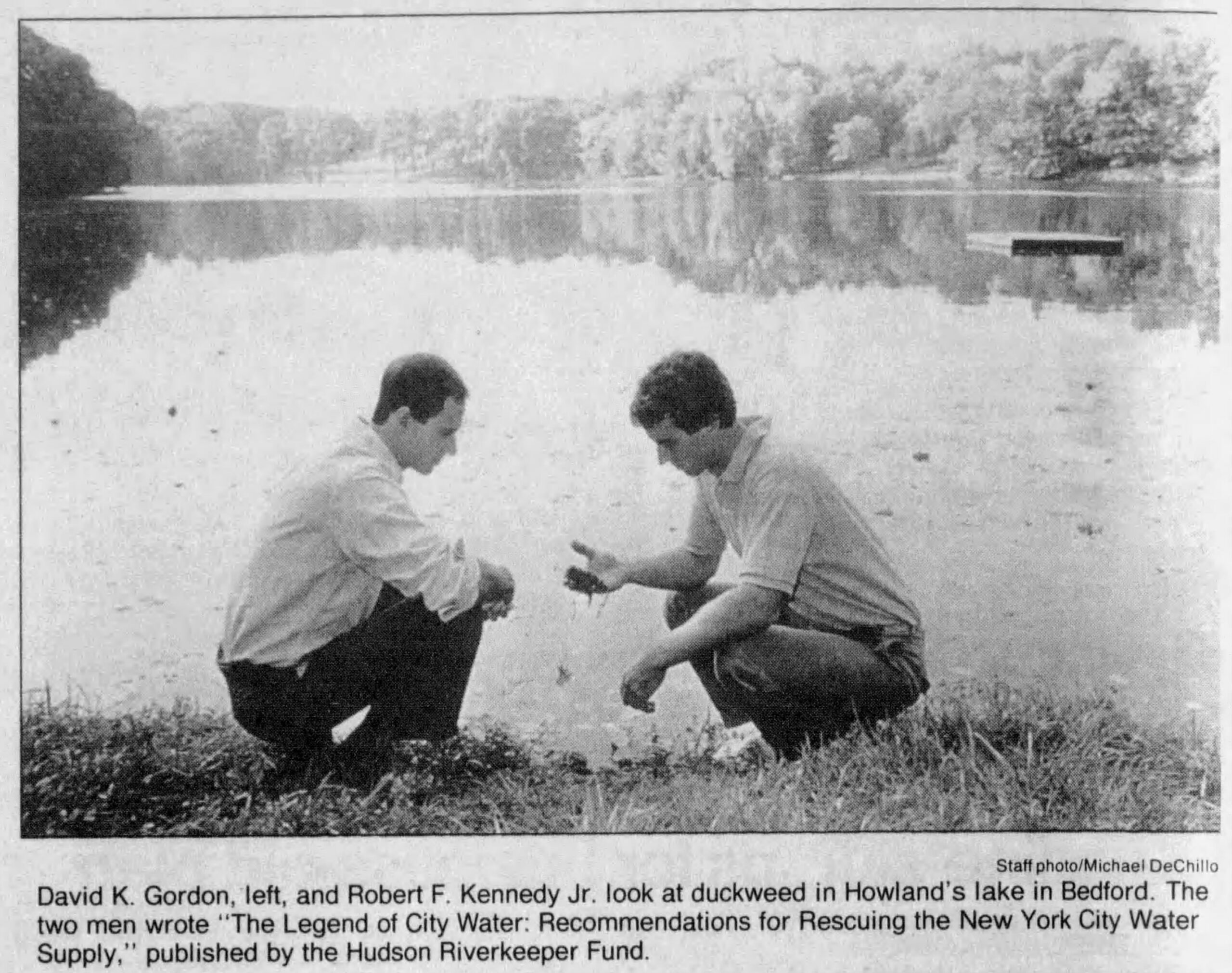
This was the posture Riverkeeper carried into the 1997 New York City Watershed Memorandum of Agreement: not as a partner of the watershed communities, but as a litigator with the contractual standing to derail any agreement that excluded it.
The Coalition of Watershed Towns understood this clearly at the time. “Certain environmental groups… Riverkeeper, NRDC, plus some others, had a very close relationship with the Dinkins administration and with [DEP Commissioner Albert] Appleton,” recalled Jeff Baker, the Coalition’s attorney. “And they saw this opportunity of the City being forced to reinvigorate their watershed protection program to foster a broader agenda: of not just water quality protection, which is what the jurisdiction of the City is related to, but broader benefits of open space protection and limiting development in the Catskills.”
Tony Bucca, the Town of Hunter Supervisor and a Coalition member who attended the negotiations, was more direct about what the watershed communities believed Riverkeeper was actually after. The suspicion, he recalled in his oral history, was “that there was a hidden agenda, that efforts at having a Catskill Park had failed in the past for political reasons… that the environmentalists really would have liked to have one last chance at preserving the Catskills as a natural area, that for political reasons all efforts at the Catskill Park type situation had failed, and that using the issue of water purity and water quality would be the pretext for achieving that.”
Bucca’s objection to Kennedy and Riverkeeper was: “We thought he was willing to permit himself to go beyond what was necessary… what we really could react to was the overkill, you know, unnecessarily strict measures.”
Ken Markert, then Delaware County’s Planning Director, read Riverkeeper’s foundational policy report on the watershed, “The Legend of City Water,” authored by Riverkeeper attorney David Gordon, and had publicly called it “despicable” in the Catskill Mountain News.

Markert’s specific complaint was that the report documented serious water quality problems in the Croton system, east of the Hudson, already slated for filtration, and then blatantly shifted to freeze all development in the Catskills, west of the Hudson, where the documented problems did not exist.
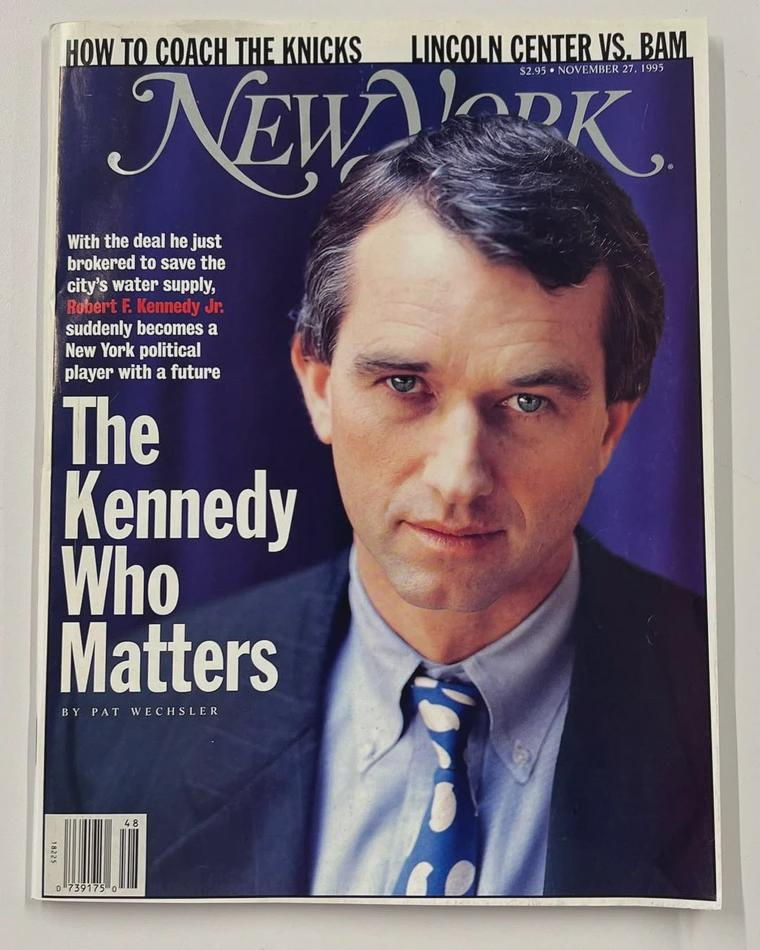
Markert was equally pointed about Kennedy’s later self-positioning as the architect of the 1997 MOA. New York Magazine had published a flattering cover story crediting Kennedy with attending some 250 negotiation meetings. “That was such baloney,” Markert recalled. “I checked. I knew, because I had been at a bunch of them and he hadn’t been at any I had been at. I guess he had been at two or three out of 250… And the whole idea that it was his idea was I think a kind of political pay-off. The other environmentalists who were more pragmatic twisted his arm into supporting this thing, which he really didn’t want to do, and so the pay-off is that they let him get a lot of credit for it.”
Marilyn Gelber, who served as DEP Commissioner under Mayor Giuliani and personally negotiated the 1997 MOA, said much the same thing about how the watershed communities viewed Riverkeeper. “Bobby Kennedy is a very forceful, articulate figure,” she said. “And he felt very angry not to have been included in the initial discussions, because in fact we set some ground rules about what was open for renegotiation. We had reached agreement with watershed communities and with the State on new regulations and had by and large reached agreement on a land acquisition program, and Bobby and the environmental community were furious that it wasn’t all open to renegotiation.”
Of the watershed communities’ specific view of Kennedy, Gelber recalled: “He was viewed as somebody who was arrogant and disrespectful and who did not at all understand the watershed community view about economic development and building a future for their children.”
The Coalition’s strategy, as Baker put it, deliberately brought Riverkeeper in to keep them from suing from the outside: “Once we realized we were going to have an Agreement, the most important thing was making it stick, and making it stick through the initial time frame when there could be lawsuits challenging it.”
Gelber, looking back, named the problem with that arrangement: “Both NRDC and Bobby Kennedy from the Pace Law Center litigate the environment and are much more, it seems to me, comfortable with a regulatory approach and if you misstep in terms of the regulations, well then you sue. I thought this litigious way of protecting the environment or reaching environmental agreements was not healthy.”
Kennedy’s aggressive tactics ensured that Riverkeeper, an organization funded by massive foundations and the fabulously wealthy, gets a permanent veto over what people in the Catskills can do in their communities. No one elected them; they just kept suing until they got invited into negotiations.
Today, Riverkeeper is running the same play it has run since 1989. What has changed is that they are colliding with their own lawsuit over the climate law.
What is Actually Going On?
The Climate Leadership and Community Protection Act has imposed a ratepayer-funded mandate to reach 70 percent renewable energy by 2030 and 100 percent clean energy by 2040. The mandate is falling apart under the weight of its own contradictions.
The political cost has driven the swirling battles over SEQR reform, the Office of Renewable Energy Siting, the role of the Department of Environmental Conservation in wetlands protection, the controversial proposal to site energy infrastructure on state reforestation land, and the self-contradicting narratives over the future of New York City’s watershed lands.
Riverkeeper and its allies have positioned itself on every side of this dispute simultaneously. They support the CLCPA. They’re suing to compel its enforcement. They oppose any weakening of the climate goals. And they have sued to void the largest available siting opportunity for renewable energy that its prominent member defended in public.
As we wrote in a previous article, for too long, the Catskills have been a blank space on someone else’s map, to address mandates or needs that were decided far away. Our Catskills Energy Future events have served as historical interventions where this critical context has been shared and ideas for a self-determined and prosperous future have been discussed.
Until New York State has a rational energy policy that accounts for where energy will be generated, how it is transmitted, and how much it costs, the legal whack-a-mole will continue. Institutions will keep contradicting themselves twenty-five days, six months at a time and decades at a time.
No matter how much environmentalists shout in crowded theaters, the contradictions are becoming harder to ignore, and they don’t reconcile with having a future with lower energy costs, good jobs, and beautiful landscapes. And the people who have to live with the consequences will start to realize that the “partner” who has been at every table for the last thirty years was never really on their side.