

In the summer of 2024, Central Hudson customers in New York’s Hudson Valley opened their bills to discover a backbreaking rate increase. Electric bills rose 7.8%. Gas bills rose 9.1%. For many households, the increases arrived on top of years of already-increasing utility costs, a billing system snafu that had sent inaccurate bills to tens of thousands of customers, and across-the-board inflation.
The question everyone was asking was simple: why? Are utility bills going up because New York has a nation-leading climate law? Or does New York need to invest in climate even more?
On March 27 in Kingston, NY, Ulster County Executive Jen Metzger, Assemblymember Sarahana Shrestha, and State Senator Michelle Hinchey held a press conference to assert the latter. Metzger, as a former State Senator, was a driving force behind the 2019 Climate Leadership and Community Protection Act (CLCPA), while Shrestha and Hinchey have made climate action central pillars of their work in Albany. The press conference comes as Governor Kathy Hochul is applying pressure to adjust the law’s timeline and underlying assumptions for the first time since its passage.
Central Hudson is one of six major investor-owned utilities in New York, all operating under the same CLCPA compliance framework and the same PSC oversight. What the Central Hudson record shows in granular detail is a pattern that ratepayers across the state are already experiencing, and that the leaked NYSERDA projection of more than $4,100 annually per Upstate household projects at scale going forward.
The answer is in the documents. We analyzed every filing across Central Hudson dockets at the New York State Department of Public Service from 2009 through 2024, with more than 4,300 documents in total. From that index, we identified and reviewed the primary source documents that matter most: Commission Orders, Joint Proposals, intervenor testimony, and Department of Public Service Staff briefs across all five rate cases.
The documents tell a story of how New York’s climate transition was deliberately financed through the utility rate case process. Politicians and organizations that championed that law, and even applauded the first wave of climate-driven rate increases in 2020, are now pointing at the bill they helped create and calling it evidence of corporate greed.
In November 2023, Assemblymember Shrestha filed formal testimony in Central Hudson’s rate case arguing that it was misinformation to attribute the utility’s historic rate increases to New York’s climate law. Three months later, the state’s own regulators found the opposite: without the climate law’s capital mandates, Central Hudson’s electric spending would have fallen below what the state had already approved in 2021.
Until now, only one side of the story has been told.
Where Were Rate Cases Like Before the Climate Law?
In 2009, Central Hudson requested rate increases that feel pedestrian by today’s standards: 6% increases in electric delivery revenues and gas. 43% of the increase was attributed to property taxes, 17% was for capital investment, and the rest were for things like tree trimming, inflation, remediation and low-income programs.
In 2014, Central Hudson requested a 14.8% increase in electric and 7.4% in gas. The main cost drivers were catching up on infrastructure investments, grid modernization, right of way/tree trimming, a storm reserve, property taxes, and other small items.
In both cases, energy efficiency costs were kept off the base rate and collected through a separate, transparent surcharge. Climate mandates appear nowhere in either filing. Rate increases were premised on maintaining reliable service.
The Climate Law Arrives
In 2020, just 13 months after the CLCPA passed, Central Hudson filed its first post-climate-law rate case. The requested increases were modest: $32.8 million (8.4%) in electric, $14.4 million (12.1%) in gas, and the approved increases were small: a slight decrease in Year 1, then around 2-3% in Years 2 and 3.
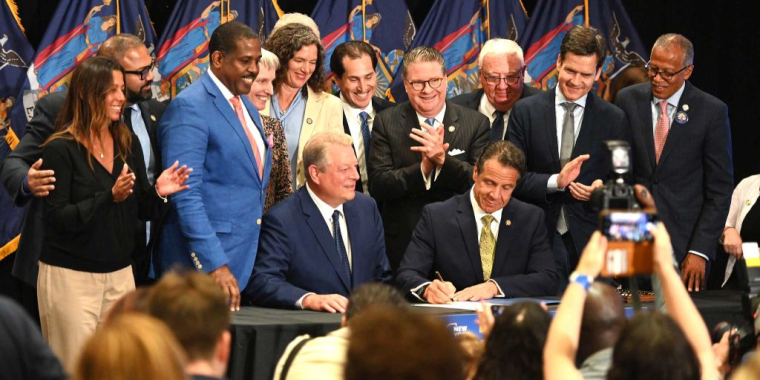
For the first time, the settlement agreement included a binding CLCPA compliance clause, signed by twelve parties including Alliance for a Green Economy (AGREE), Public Utility Law Project (PULP), and Dutchess County, with CLP, the Metzger-founded organization, filing a separate statement welcoming the CLCPA provisions as a landmark step.
The proposal contained a host of climate obligations, including a 2.5 percent reduction in gas sales from 2019 levels, fleet electrification targets, decommissioning of gas combustion turbines, elimination of oil-to-gas conversion incentives, and a geothermal feasibility study. AGREE publicly celebrated, saying “To our knowledge, this Joint Proposal is the first in New York to pledge a commitment on the part of a gas company to reduce gas sales in the coming years.”
The CLCPA was now embedded in the rate base, and not an efficiency surcharge as in years past. The bills would come later.
In July 2022, Metzger, now the Policy Director of New Yorkers for Clean Power, submitted formal comments on the Climate Action Council’s Scoping Plan.
Her comments called for the PSC to “prohibit utilities from expanding the gas distribution system into new geographic areas” and called out Central Hudson for cutting “incentives for air-source heat pumps in half in February 2022, which will only serve to slow adoption of these systems.”
Four months later, Metzger took the stage as Ulster County Executive-elect in Kingston to speak at the launch of the NY Renews coalition’s Climate, Jobs and Justice Package.
Standing with the coalition that had driven the CLCPA’s passage and whose member organizations had signed the 2020 Joint Proposal, she told the audience: “The high natural gas prices [are] driving our high utility bills… the sooner we reduce our dependence on fossil fuels and shift to a clean energy economy, the better we all will be.” She also said: “The revenue raised to fund the climate act cannot burden our residents and small businesses. It absolutely has to be done fairly.”
The programs the climate coalition demanded, such as heat pump adoption, building electrification and restrictions on gas expansion added tens of millions in new rate allowances. And the grid infrastructure needed to deliver that clean energy pushed Central Hudson’s capital budget beyond what the state had already approved in 2021.
Here Come the Climate Costs
By 2023, the bill came due. Central Hudson filed the largest rate increase request in its history: $139.5 million (31.6%) in electric delivery revenues, and $41.5 million (29.2%) in gas. For perspective, the 2009 electric request had been $15.2 million. This one was nearly nine times larger.
For the first time in recent history, no Joint Proposal was reached after a contentious process. The Commission approved $74.4 million (16.5%) in electric delivery revenue increases and $27.3 million (20.1%) in gas, then applied one-time bill moderators to reduce the immediate customer impact to $58.1 million electric and $21.2 million gas. The full revenue requirement is being collected from ratepayers.
The rate case now had an entirely new section: a dedicated “Climate Leadership and Sustainability Panel,” with a team of Central Hudson witnesses whose testimony was devoted to CLCPA compliance. Alongside the traditional cost drivers was a new category of spending that had not existed in any prior Central Hudson rate case. These climate costs included:
- Energy efficiency and building electrification – $23.2 million
- CLCPA Phase 1 capital projects – $50 million in the rate year
- 45 new employees dedicated specifically to CLCPA targets – 19% of all new hires
- A proposed blank deferral account for future climate mandate costs described in testimony as “unknown and uncertain at this time”
In response, Assemblymember Sarahana Shrestha filed formal testimony, arguing that Central Hudson was misrepresenting the source of the increases.

The state’s own regulatory staff told a different story: that without these CLCPA Phase 1 projects, Central Hudson’s capital budget would have stayed well within the levels the Commission approved in 2021.
“If the capital expenditure impact associated with CLCPA Phase 1 projects are filtered out from the Company’s proposal, its remaining capital expenditure forecast would be well below the Company’s historic actual spending levels, and the Commission-approved total electric capital spending levels approved by the Commission in the 2021 Rate Order.”
Department of Public Service Staff Initial Brief, Page 106
In other words, the CLCPA additions were not supplementing a growing capital program. They were the growth.
The Department of Public Service recommended approving the CLCPA-driven increase because they would help create headroom for over 500 MW of new intermittent renewables in the Hudson Valley. Staff also recommended cutting an $8.25 million Electric Transmission Structure Coating program to make room for the CLCPA capital, finding it “not immediately necessary at this time” in light of the climate mandate costs. Not only did the climate law add to ratepayer costs, but it displaced other suggested infrastructure maintenance to do it.
Shrestha’s testimony went further than the broad misinformation claim. She opposed multiple expenditures that flowed directly from the 2020 Joint Proposal’s commitments (the same agreement AGREE had celebrated as a landmark just two years prior). She argued Central Hudson “should find non-ratepayer sources of funding for electrifying a portion of its fleet” and called on the PSC to “reject Central Hudson’s capital expenditures associated with its proposal to introduce solar generation.”
The PSC As An Enforcer of the Climate Law
The next rate case, settled through a Joint Proposal filed in May 2025, should dispel any notion that climate compliance is not driving increased costs. The three-year rate plan set cumulative delivery increases totaling 16.1 percentage points for electric and 26.5 percentage points for gas.
The big ticket item was $177 million for 17 electric projects located within Disadvantaged Communities, which are CLCPA Phase 1 grid upgrades required by the law’s equity mandate. Central Hudson put a number on it in its own published rate plan brochure: ‘The impact of CLCPA Phase 1 projects equates to approximately $36.6M per year on electric rates. This includes transmission line rebuilds, upgrading substations, and replacing antiquated distribution circuitry to meet today’s building standards.'”
That figure is the clearest answer available to the question this piece started with. It is Central Hudson telling its own customers, in plain language, what one category of climate mandate compliance costs annually.
The Commission’s approval order confirmed the rationale: rate increases were necessary “while advancing Commission and State policies, including the Climate Leadership and Community Protection Act.”
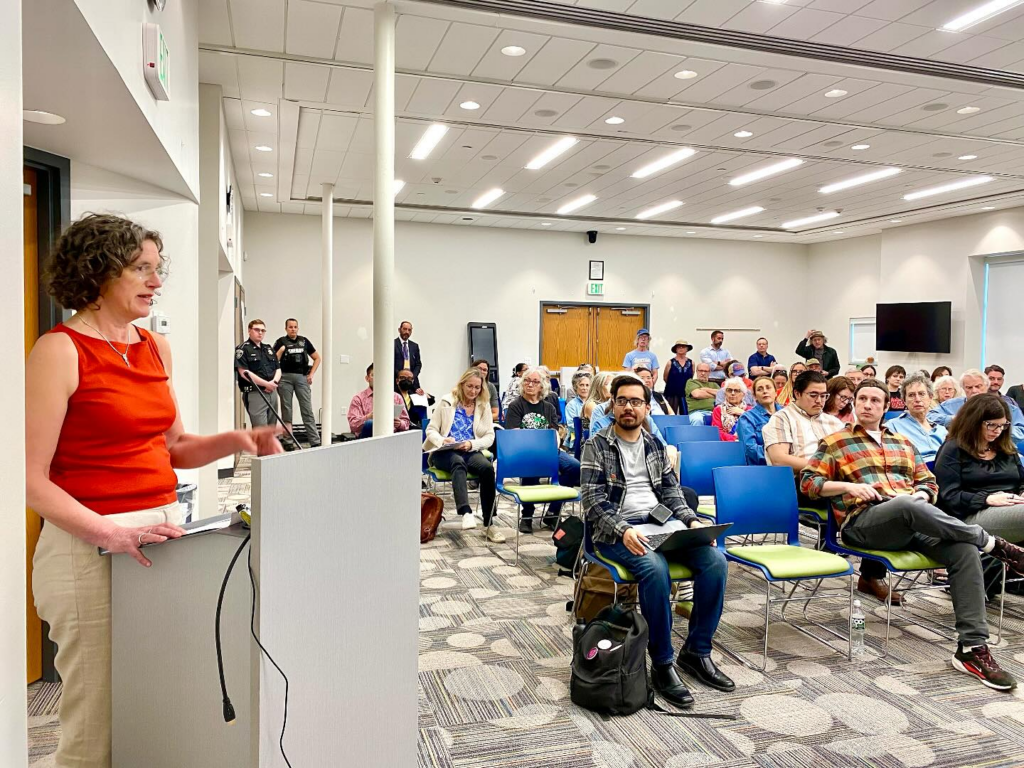
After the PSC approved the increases in 2025, Shrestha declared that “state regulation of investor-owned utilities is a sham for customers.” Hinchey said the PSC had “increased costs for every day New Yorkers, without significant benefits in return.” Metzger said “I appreciate the PSC’s efforts to reduce Central Hudson’s original rate request, but it does not go far enough and asks too much of ratepayers.”
All three called for the PSC to somehow deliver the same climate mandates at lower cost, without explaining how.
What Needs to Be Said
Separate from the debate over the true costs of the CLCPA, there are legitimate grievances against Central Hudson. The 2021 billing system crisis produced widespread problems for customers, and the fallout contributed to cost pressures that rightfully fell on shareholders.
But beyond the Hudson Valley, this should be a case study in evaluating the true costs and supposed benefits of the climate law. The rate increases that are condemned today were filed to comply with a law that state politicians wrote, championed, and have defended.
The organizations standing with them signed the 2020 Joint Proposal that embedded those compliance obligations and called it a landmark. The expenditures they opposed in testimony are the implementation costs of the law they champion. The PSC whose decisions they call a sham is applying the CLCPA’s own provisions when it approves those rates.
Shrestha called it misinformation to attribute the rate increases to the CLCPA. The state’s own regulators, reviewing the same record, found the opposite. Both statements are in the public record. Central Hudson ratepayers are paying for both.
When it comes to evaluating what should be done with the CLCPA in 2026, it should be clear: we are not talking about hypothetical costs. The bill for the climate law has already come due.