
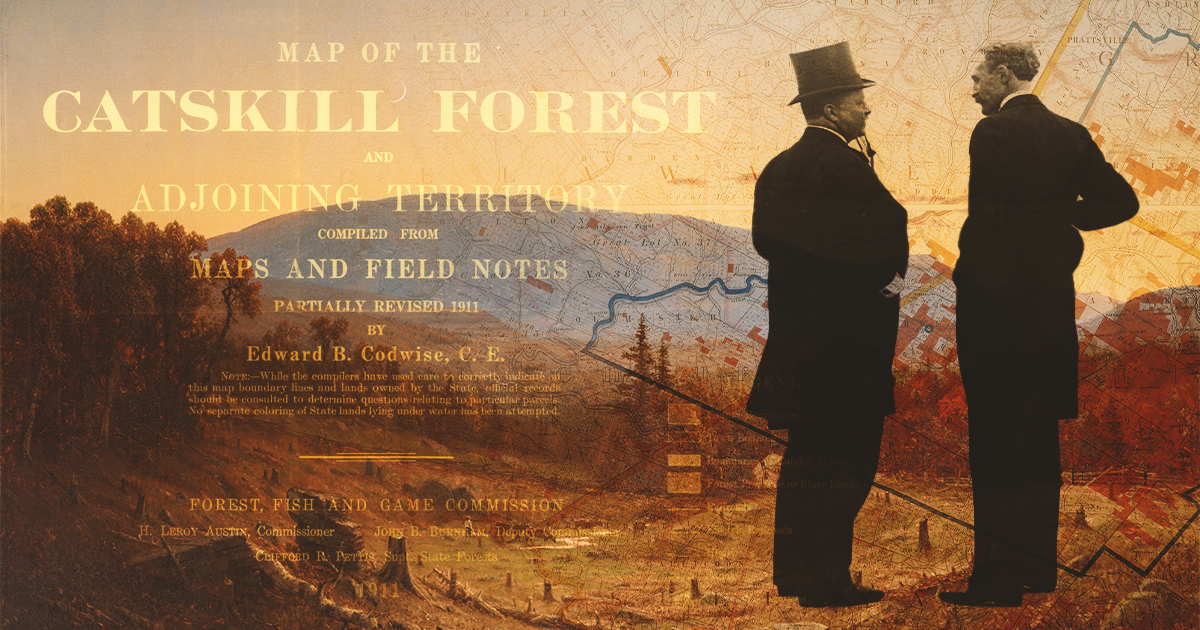
Last month, a bill quietly passed in the New York State Senate that few people in the Catskills know about.
Sponsored by Senator Rachel May of Syracuse and voted for by Senator Michelle Hinchey, Senate Bill S4408 would allow the Department of Environmental Conservation to grant leases and easements on state-owned reforestation lands for green energy projects like solar and wind installations.
According to DEC data, there are 87,300 acres of state forest land in and around the Catskills that could be affected by this bill, including Vernooy Kill State Forest, Burnt-Rossman Hills State Forest, the Shawangunk Ridge, and the Steam Mill State Forest.
When pressed on the Senate floor about why communities that have organized to block solar sprawl from their farmland and viewsheds wouldn’t simply do the same here, May was candid about the underlying logic: “There is a push to put these kinds of facilities in places that are out of the way.”
“[It] is up to the DEC to decide if it is compatible with the purposes of the land,” she said. Community solar installations, she said, “…only work if you can put the transmission lines through some of these remote or forested areas.”
The bill, which has advanced to the Assembly Committee on Environmental Conservation, is a continuation of a centuries-long tradition for the Catskills. The Catskills are “out of the way” and it’s up to someone else to decide what to do with them. Close to 50% of Catskill Park is controlled by either New York State or New York City, and that didn’t start with S4408.
It starts in 1708, with a land grant.
What does a rational, win-win energy plan look like for the Catskills, New York City and the state as a whole? Join us on March 21, 2026 at the Phoenicia Playhouse to be part of the conversation. Register now.

The Hardenbergh Patent and the Patroon System
In 1708, Queen Anne of England’s wicked governor Viscount Cornbury awarded over a million acres of the Catskills and Hudson Valley to Johannis Hardenbergh, forming the “Hardenbergh Patent.” Rather than awarding the land to people who would actually live on it and cultivate it, the patent handed control to a small group of wealthy speculators, creating, as one historian put it, a “swath of land monopoly and aristocratic domination.”
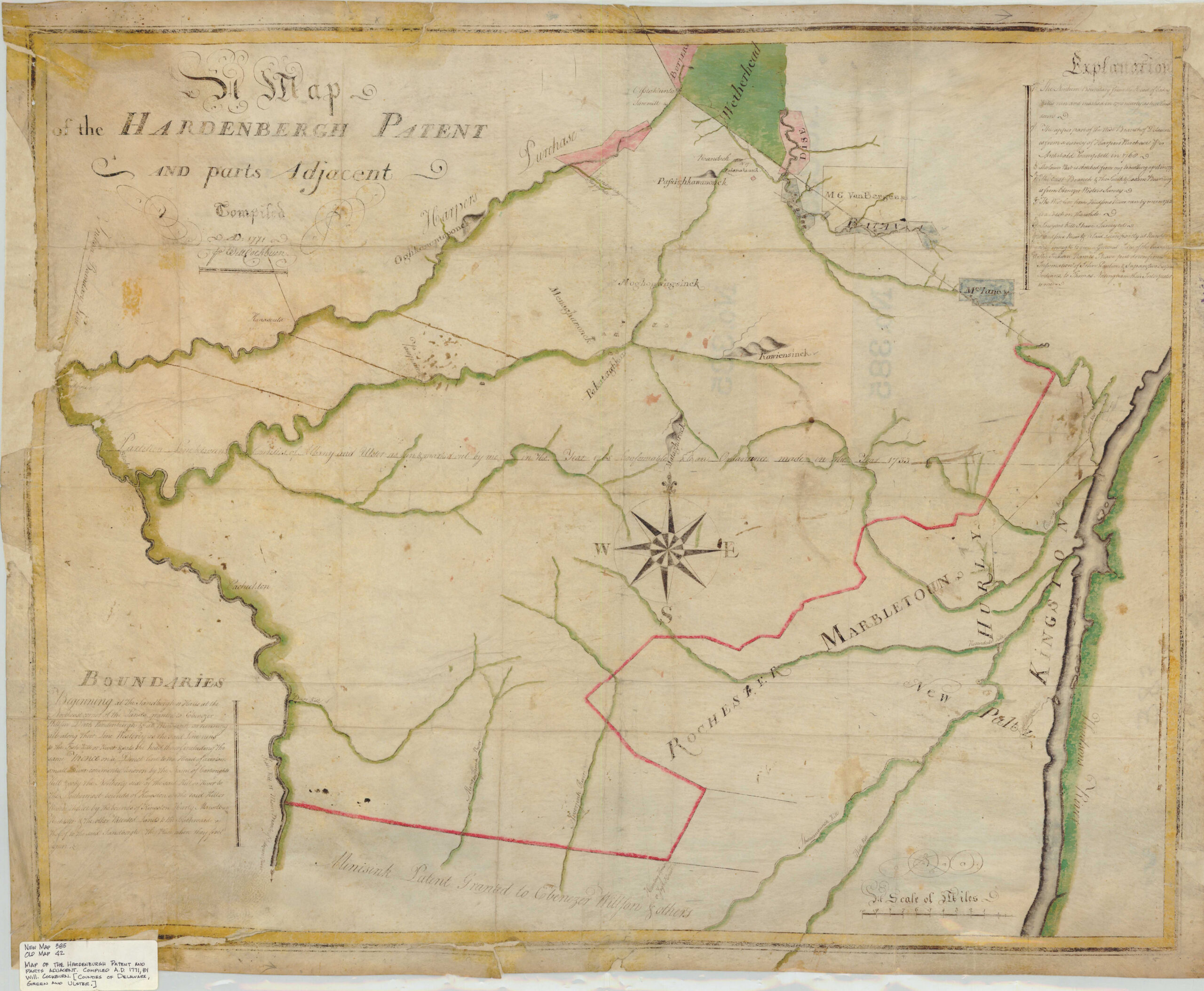
In 1749, the land was divided amongst New York City merchant oligarchs like Hardenbergh, Robert Livingston and Gulian Verplanck, who were trusted to maintain a monopoly over the colonies, alongside the Van Rensselaer family, who had existing holdings grandfathered in from the Dutch crown. To develop the vast, unprofitable wilderness, the proprietors needed labor and capital. Both were in short supply. As an intermediate step, the only thing the landlords could offer was were, at the time, favorable lease terms: zero down payments and four to seven years of zero rent, which induced poor men to build farms rather than work as day laborers. However, once the free years were up, the tenants were transitioned into perpetual leases, paying rent in wheat and “fat fowls.”
The Agricultural Crisis and the Anti-Rent War
As long as grain prices were high, this system worked well enough as a developmental step to develop many of the villages and towns we know today. But by the 1820s, a profound crisis emerged. The soil wasn’t rich enough to support more than subsistence farming, and it was hit hard by the scourge of the Hessian fly. This collided with an economic crisis, when the Erie Canal connected much more productive grain farmland in Western New York to New York City, cutting the cost of shipping by 90%. Flooded with cheap western wheat, the teetering farms of the Catskills and Hudson Valley became completely unviable.
In order to pivot and keep paying rent to the patroons, farmers needed access to capital for new technology, and to transportation infrastructure to get their products to market. But because the landlords still held the rights to the land, farmers couldn’t use their land as collateral to access credit. And while the Delaware and Hudson Canal helped somewhat, railroads were not yet advanced enough to reach the many remote areas of the Catskills. The quasi-feudal lease system was on life support and needed to change with the times. But instead, a new generation of patroons (who replaced the more lenient “Good Patroons” like Stephen Van Rensselaer) cruelly demanded immediate back rent to be paid, an impossible demand.
Farmers, pushed to the brink, turned to Jacksonian mob politics through the Anti-Rent War, while surviving financially by extracting the region’s tanbark and timber resources.

John Wesley Jarvis, Portrait of James Fenimore Cooper, 1822. New York State Historical Association. Public domain.
After much struggle, the Anti-Renters wore down the landlords and acquired the deeds to their property. But their victory just meant that they were the owners of “miserable bush pasture”, with tanning bark extraction as the only profitable industry. Whether they were tenants or owners, farmers needed infrastructure to bring products to market, and they needed access to credit. For much of Delaware County, the 1850s advent of the Erie Railroad was a quantum leap, connecting Deposit to New York City.
Many locals abandoned failing wheat crops and pivoted to grazing and dairying, helping Delaware County farmers reach a market hundreds of times larger than before. This led to Delaware County becoming the dairy capital of the nation, and created many successful intergenerational farms.
However, not all of the Catskills were so lucky. The canals and railroads infrastructure wouldn’t reach the more challenging mountain areas, leading to names like Zadock Pratt of Prattsville, Colonel H.D. Snyder and James Simpson in Phoenicia, and Pratt & Sampson in Shandaken becoming synonymous with stripping millions of feet of hemlock annually to supply bark for massive tanning operations, leaving peeled logs to rot in the woods. The tenant farmers of yesteryear were left to fend for themselves as owners of poor farmland.
It was at this time that Hudson River School Painter Sanford Gifford completed Hunter Mountain, Twilight, a sublime juxtaposition of a beautiful evening in the Catskills with the aftermath of slash and burn tannery operations.

Gifford’s painting represented the nadir of the tanbark era of the Catskills; it was soon reported that there was simply no bark left, and the tanning industry moved West and South to do the same thing all over again.
The Railroad Bonding Disaster
At that same time, the “robber baron” era of the post-Civil War was in full swing. Federally and state-funded Hamiltonian infrastructure projects became a thing of the past. Instead, the New York Legislature passed laws that dared small municipalities to bear the massive financial risk of private railroad construction. In the spring of 1866, the state legislature passed two disastrous bonding acts, authorizing towns along the proposed routes of the Wallkill Valley Railroad, as well as the New York Oswego Midland Railroad to issue bonds for up to thirty percent of their total assessed property value, and invest the proceeds in railroad stock.
This was a complete inversion of how New York had previously built the Erie Canal and Delaware and Hudson Canal, which were fully or partially financed (respectively) by the state with the intention of public benefit. The railroads would be exempt from local taxation for ten years, while local communities remained responsible for making interest payments. Towns like Shawangunk, Gardiner, and New Paltz were explicitly named in the bills.
After taking on massive debt to backstop the railroads, the financial Panic of 1873 hit at the worst possible time. The Midland railroad collapsed, and the Wallkill Valley Railroad was not yet profitable. Many property owners, having stripped off all of their hemlock bark in years prior, simply walked away from their ruined land rather than pay the bloated taxes. Their land was reverted to the county, leaving local officials holding the bag.
How Ulster County’s Debt Became a Forest Preserve
Several Ulster County towns were in a deep financial hole in the 1870s. The worst example was the Town of Shawangunk, which had issued $114,000 in bonds to buy stock in the Wallkill Valley Railroad. For perspective, their their town’s entire property value was a mere $774,000. In order to make an interest payment on their debt, their taxpayers had to cough up $42,000, on top of the normal taxes for the operation of the town.
Several other towns were in the same boat, and by the late 1870s, Ulster County was the only county in New York State that could not pay its obligations to the state treasury office. Albany then passed a flurry of legislation between 1879 and 1883 that made Ulster County’s treasurer personally responsible for the arrears. By 1884, the county (and the treasurer owed the state $40,000 with no mechanism to repay it.
The local man who went to Albany to solve this was a Shawangunk farmer and supervisor named Cornelius A.J. Hardenbergh, elected to the Assembly in 1884 on an anti-tax platform. His family name was not a coincidence; he was a direct descendant of the very same oligarchical patroon to whom Hardenbergh patent was awarded to a century ago. The patent’s legacy of absentee ownership and underdevelopment was directly part of what had produced the fiscal crisis Cornelius was now trying to solve.
He arrived in Albany just as the state legislature was heavily focused on creating the Adirondack Park. An expert commission toured the Catskill region and was left completely unimpressed compared to the rich forests of the Adirondacks; the tanbark industry had left nothing behind, and the experts concluded that the forests would never yield merchantable timber again. They determined that protecting the Catskills was of “less general importance” than preserving the Adirondacks.
But the Catskills ended up being preserved anyway, not because science demanded it, but because Ulster County needed a bailout. On April 20, the legislature passed Chapter 158 of the Laws of 1885, which wiped Ulster County’s debts to the state. In exchange, all of Ulster County’s delinquent parcels were conveyed to New York State.

Within a month, the Forest Preserve Act was passed, designating all state-owned lands in Ulster, Greene and Sullivan Counties, as well as those in the newly minted Adirondack Park, as “forever wild.” In 1894, the “forever wild” language was written into the State Constitution.
“The lands now or hereafter constituting the forest preserve shall be forever kept as wild forest lands. They shall not be sold, nor shall they be leased or taken by any person or corporation, public or private.”
New York State Constitution, Article XIV
The state suddenly found itself holding roughly 135,000 acres of detached, scattered parcels across the Catskills, many of which were entirely unsuited for a preserve. They wanted to sell these useless parcels off, but their own new constitutional mandate forbade it unless the land fell outside of “park limits.” In 1904, they arbitrarily created a “Catskill Park,” drawing the “blue line” boundary across the map. This created Catskill Park and roped in parts of Delaware County. The park allowed them to dump unwanted land outside the blue line, creating a gerrymandered land-use jurisdiction.
The Reservoir System and the End of the Dairy Economy
By 1907, as New York City looked to the Catskills for cheap, gravity-fed water, the lofty “forever wild” language was swiftly modified to allow for 3% of the protected Forest Preserve to be flooded and used for the construction of public water storage and dams. The amendment to the state constitution stands to this day, explicitly allowing state lands to “be used for the storage of water for public purposes and the construction of dams therefor.”
The utilitarian conservation framework that made this possible had been assembled by some of the most powerful men in the country. Gifford Pinchot, the first Chief of the U.S. Forest Service, recalled in his autobiography the movement was “still without a name” until he found one in India, where British imperialists administered vast tracts of conquered land as “Conservancies.” In 1907, Pinchot pitched the name to President Theodore Roosevelt, who approved it instantly.
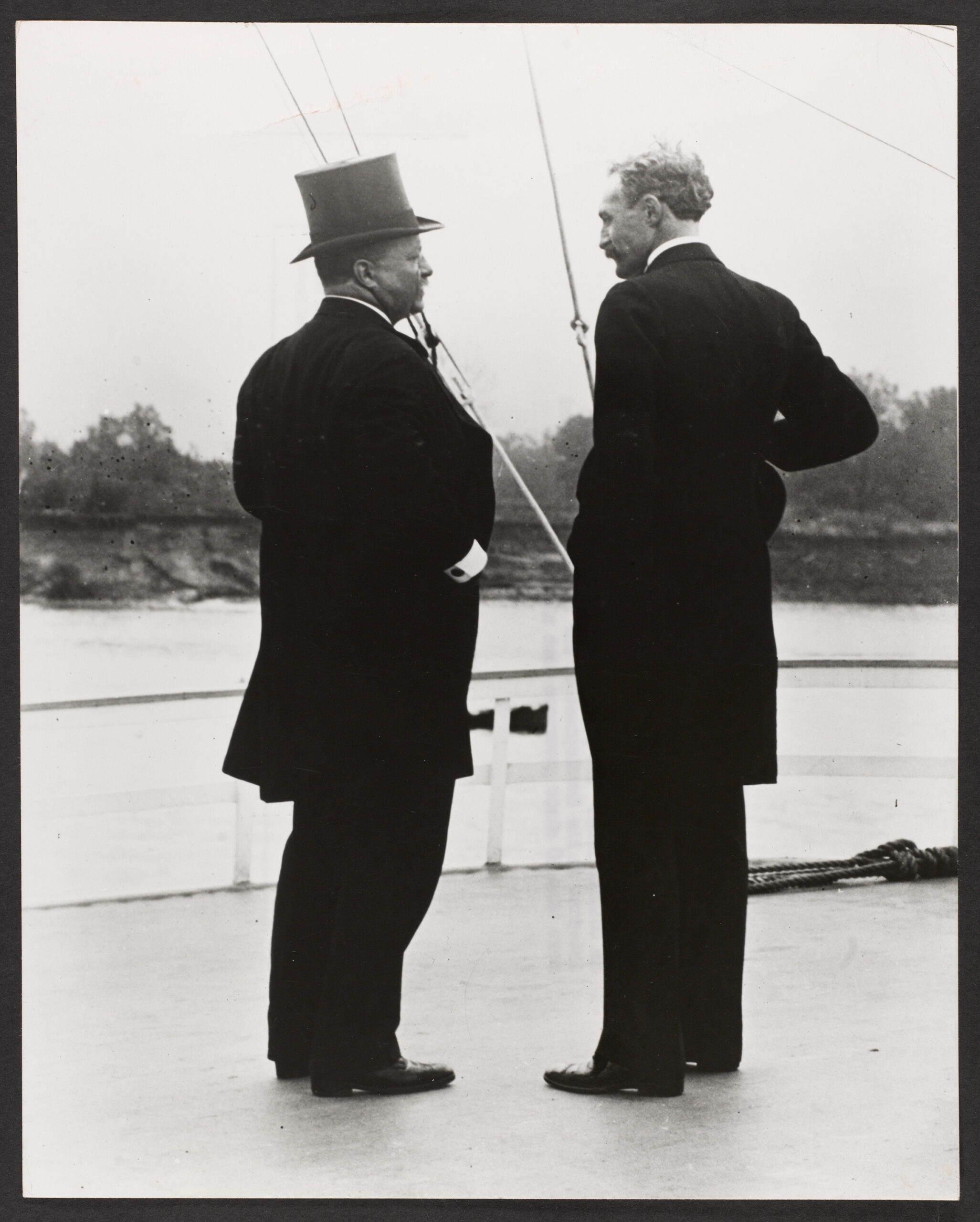
The term embodies the rational extraction of remote resources for the benefit of the empire, over the objections of people who actually live there.
Pinchot was named after the Hudson River School painter Sanford Gifford, who painted Hunter Mountain, Twilight, his quiet elegy for the hemlock forests stripped bare by the tanning industry. Pinchot’s father, a millionaire New York real estate speculator and lumber financier, was a close friend and patron of the artist. The painter had warned against the Catskills’ first wave of utilitarian extraction, but his namesake took the visual legacy of that stripped landscape and used it to justify a bureaucratic framework that would lock the region into a permanent state of managed underdevelopment, administered, as always, from somewhere else.
By 1911, the Catskill Forest Preserve was administered by the Pinchot-inspired New York State Conservation Commission, which combined water and land management. By 1926, it became the Conservation Department, and in 1970, on the first Earth Day, Governor Nelson Rockefeller transformed the department into the Department of Environmental Conservation (DEC) that we know today.
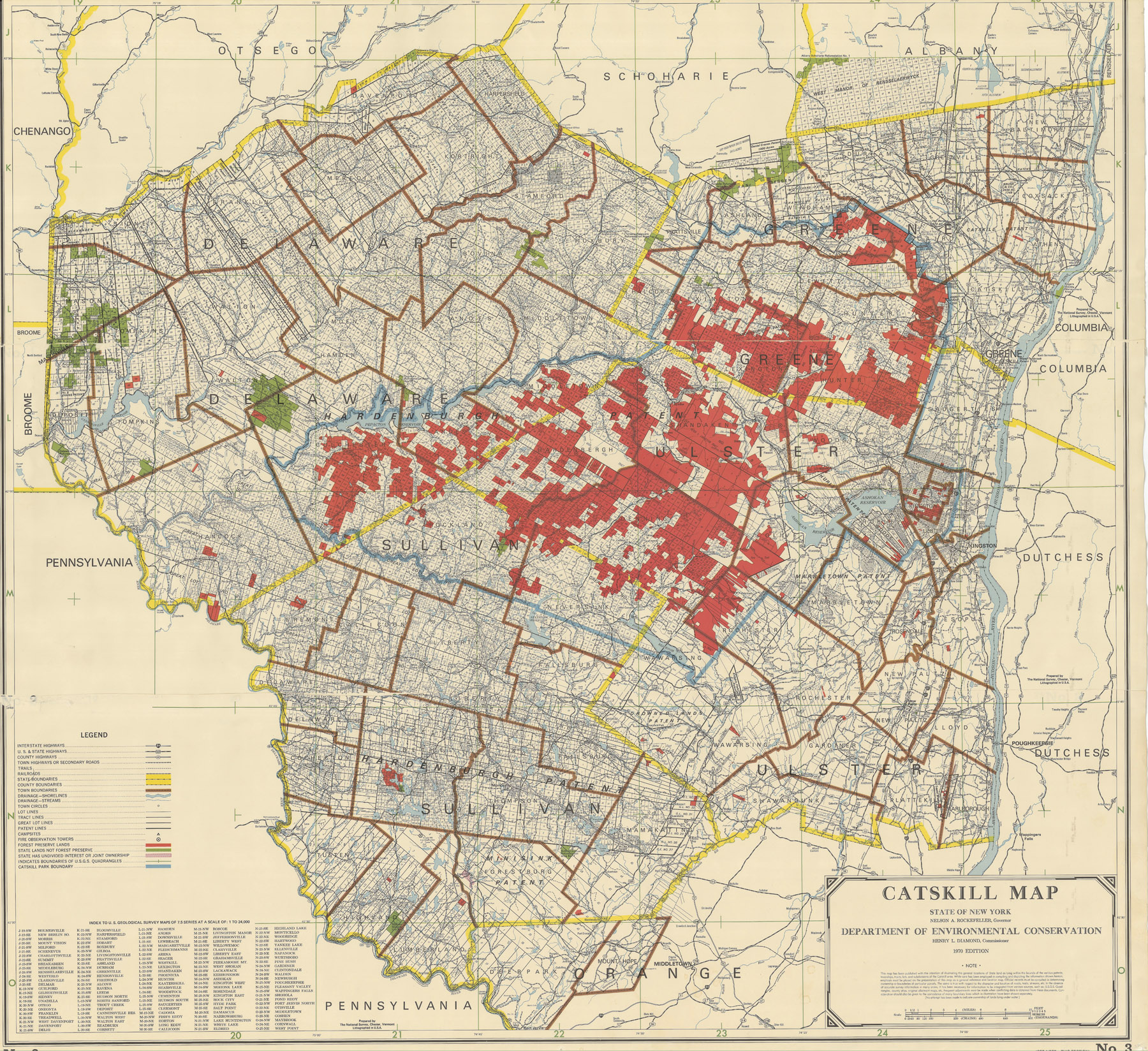
Meanwhile, New York City was quietly building the infrastructure that would define the region for the next century. The Ashokan Reservoir, completed in 1915, flooded the hamlets of the Esopus Valley. The Pepacton and Cannonsville reservoirs, completed in the 1950s, drowned Delaware County’s most productive farmland that John Jervis’s Erie Railroad had made into the dairy capital of the nation a century earlier. Instead of thriving by selling valuable dairy products to New York City, the Catskills became a site of managed decline.
Hardenburgh’s Last Stand
The tiny Ulster County town of Hardenburgh was named for the same Johannis Hardenburgh patent family, and it is completely encircled by the Catskill Forest Preserve. In the 1970s, their 236 residents were getting crushed by a $20M tax levy, while neighbors like the Zen Studies Society Inc., the Dung Kar Gumpa Society for the Preservation of Tibetan Dancing, the Catskill Center, and of course, the State of New York, were all receiving large tax breaks.
They resorted to an ingenious legal rebellion: 200 of the residents obtained “certificates of ministry” by mail from the California-based Universal Life Church.
“Lester Bourke, who owns 192 acres of land, only 19 of which can be farmed for corn, saw his property taxes rise from $1,822 in 1974 to $5,642 last year. He figures three-quarters of his income is eaten up by the local property tax.”
Lee Mitang, Associated Press, January 17, 1978
Backed by their local town assessor, Robert Kerwick, these newly minted ministers claimed full religious tax exemptions on their properties, refusing to pay taxes on land that they could do little with. It was a gesture of defiance against a situation that had been created entirely without them.
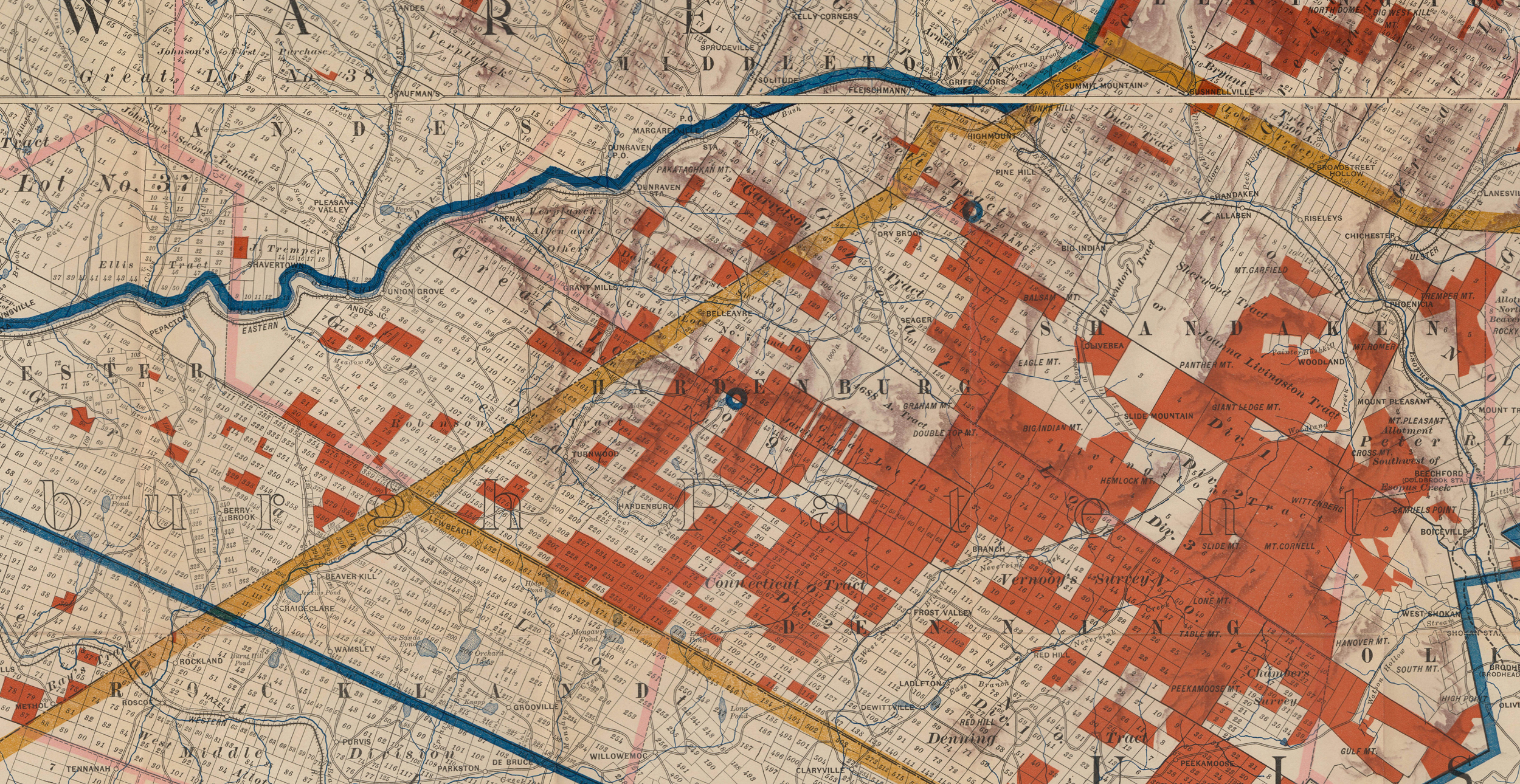
But, true to the historical pattern of the Catskills, they were quickly overruled by authorities acting from afar. The State Legislature in Albany enacted strict new guidelines taking effect in 1979 that limited such exemptions only to property used exclusively for church purposes. The town sued the state, arguing the new statute violated their First Amendment rights, but the New York State Court of Appeals ruled against the residents, forcing the properties back onto the tax rolls.
While New York City’s population grew by fifty percent over the last century, Delaware County has slightly lost population. In Phoenicia, an Ulster County hamlet in Shandaken surrounded by Forest Preserve land, the population fell thirty-seven percent between 2012 and 2023. These population losses mean that fixed costs are being shared among a shrinking pool of people, leading to the cost of taxes, utilities and other essentials rising for everyone. The elementary school closed and a critical sewer system was never built because outside agencies withdrew funding after years of bureaucratic gridlock.
Albany’s Next Idea: Solar Panels on “Reforested” Land
A century of arrested development and temporary boom and bust cycles have left the Catskills in a vulnerable position. The system governing the region is on the verge of changing again, but not in the way that many Catskill residents would hope.
The region was once targeted as a place for cheap farm labor. Then it became tanning bark. Then it became a dual-purpose “conservation” zone with water resources. And today, as New York State falls further behind on its 2019 climate goals, city and state officials are looking at the Catskills to save them yet again.
The irony is that the Catskill Forest Preserve originally began as reforestation land. As the 1885 forestry report found, there weren’t many forests to preserve; the hillsides were covered in stripped trees and stumps that the state then acquired simply allowed to grow back. The distinction between what is “reforestation” and “forever wild” preserve land, at least in the Catskills, is a completely arbitrary legal definition that can be altered to provide tax relief, build reservoirs, and now, to build solar panels and transmission lines.
Once again, the Catskills are being treated as a blank space on someone else’s map. As Senator May asserted, the forests are “out of the way,” and the few people that live here can be a financial backstop and sacrifice the landscape for infrastructure decisions made far away.
What a Different Model Looks Like
The Catskills have never lacked resources; it lacks agency. For centuries, the residents of the region have been stuck playing the hand that they are dealt, and picking up the pieces after decisions were made far away. The question for the region in 2026 is: what would happen if local residents, not Albany or New York City bureaucrats, got to decide what the future of the Catskills should be.
That conversation is happening on March 21 at 2 PM at the Phoenicia Playhouse. A screening of Unfiltered: New York’s Watershed Battle will be followed by a rich community conversation where anyone is welcome to speak. Buy your ticket today.