On a Thursday night in late February, the Okun Theater at SUNY Delhi filled with over 80 students, farmers, engineers, retirees, and local officials who came to watch the second-ever screening of Unfiltered: New York’s Watershed Battle.
The film traces the history of New York City’s Catskill watershed system, from the clash of Alexander Hamilton and Aaron Burr over the Manhattan Water Company, to the original taking of land for the reservoirs, through a controversial early 20th-century “depopulation plan,” and into the present day, where new pressures on the region are mounting from renewable energy. But rather than simply re-litigating old grievances, each event is an opportunity offered by the filmmakers to rural communities.
It’s not about solar versus nuclear, or upstate versus downstate, but something much more important: what kind of future does Delaware County get to have?
A Changing Landscape for the Watershed
The February 19, 2026 event came in the midst of multiple developments confirming that the role of the New York City and state government in the Catskills is evolving around the issue of renewable energy, with or without the host communities.
New York City Mayor Zohran Mamdani appointed Lisa Garcia to head the Department of Environmental Justice, who promises a robust “environmental justice” framework that prioritizes people who live in the Bronx and Queens. A bill to allow the New York Department of Conservation to develop solar energy on “reforestation” land passed the State Senate. The Coalition of Watershed Towns expressed concern that their own economic development study is being ignored in favor of a McKinsey study commissioned by NYC. And the Town of Middletown is exploring a solar moratorium to protect against potential “mission creep” in the new pro-renewables watershed pact.
As with New York Energy Alliance’s first Catskills Energy Future event, the conversation after the film was just as important as the film itself.
“You Talked About Things I Struggle With Every Day”
John Gasstrom, CEO of the Delaware County Electric Cooperative, offered some of the evening’s most interesting testimony. He leads an organization responsible for delivering “safe, clean, reliable, and affordable energy” to 5,500 people across Delaware, Schoharie, and parts of Otsego and Chenango counties.
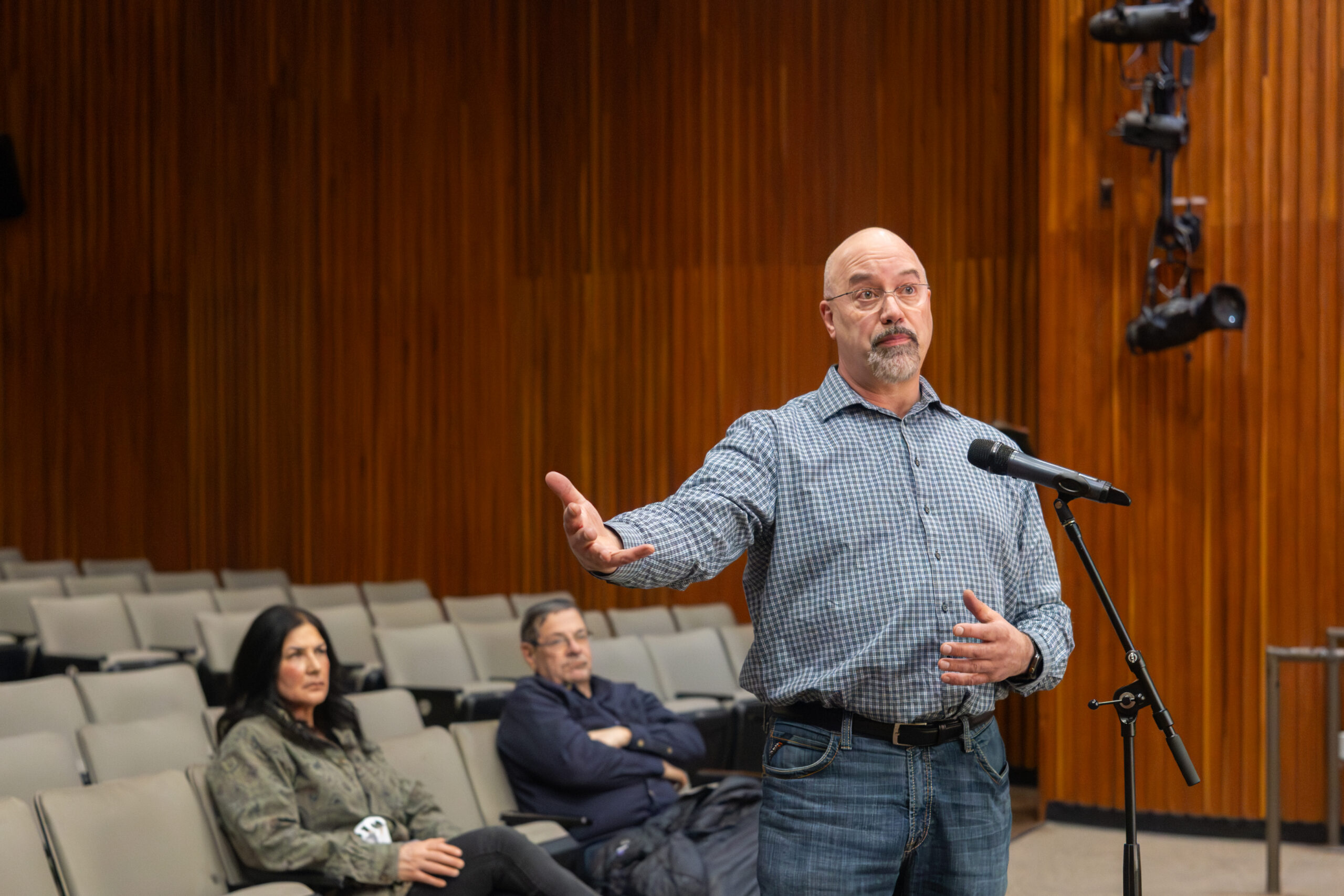
Gasstrom said the film illuminated two issues that are affecting the operation of his utility. The first was the issue of stagnant population growth. While there is no literal “depopulation plan” for the watershed as proposed by New York City’s J.P. Morgan-aligned Merchants Association in the 1910s, city policies have locked up land and economic development opportunities so that population growth is nearly impossible. That pressure is increasingly showing up on electric bills.
“When you don’t have available land for expansion and growth, I can’t continue to spread fixed costs over a greater number of people to keep electric bills low,” he said. “Your statistic of 0.1% growth in Delaware County matches what I’ve seen across my electric grid. I see growth in usage, but not in the number of consumers. So everybody coming on is picking up more costs.”
The second issue was the difference between firm energy and wind and solar. DCEC was created in the 1940s by Franklin Delano Roosevelt’s Rural Electrical Administration policy, on the basis of helping farmers in the then New York City “milkshed” increase productivity with electricity to prevent food shortages. But what has allowed local people to depend on DCEC is their purchase power agreement with the New York Power Authority for 24/7 electricity from the St. Lawrence-FDR hydroelectric plant in Massena, NY dating back to the 1950s.

“Hydro is a great renewable source… far more reliable, dependable, and schedulable than solar or wind,” Gasstrom said. “When I need power, it’s 6 AM on a January morning, or 8 PM on a February evening, and I don’t have solar generating then. Unless I’m going to invest tens of millions in battery storage (and I’m looking at that) it’s very difficult.”

“And tying it all back together, it’s not just energy affordability, it’s property affordability, creating an economic environment where businesses can locate here, which brings people to live here, which creates a growth engine that becomes an affordable model to operate and live in.”
Q&A Highlights
Taking Responsibility
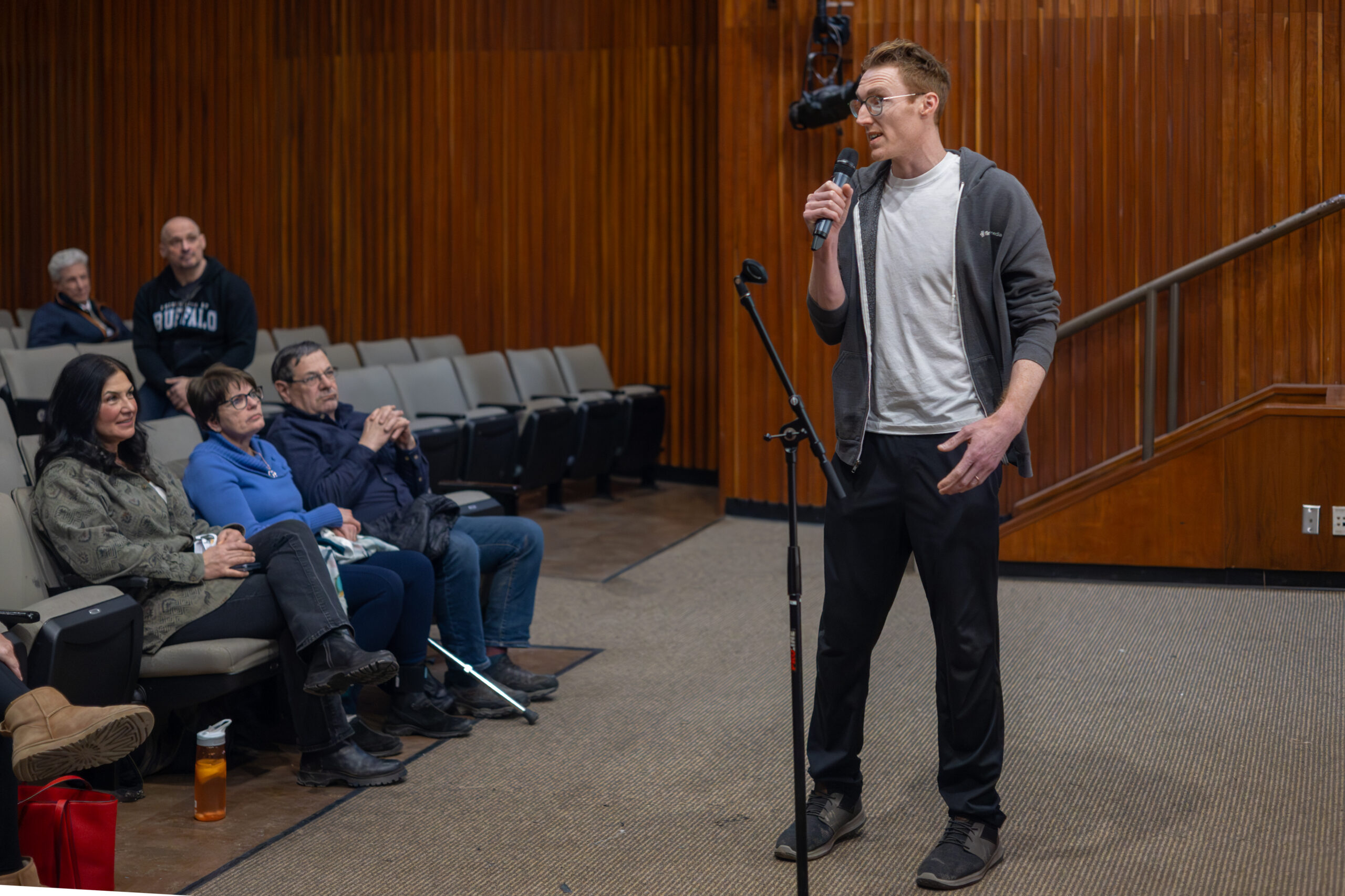
“What I took away the most was just the words ‘locals taking responsibility for their towns.’ I don’t know what the agenda is here, but I know that we have to come together and cooperate and figure out our situation — not rely on New York City or whatever. Maybe it’s a combination of solutions… And if we invest in anything, we should own it. We should own our town’s infrastructure and take responsibility for it.”
– Thomas, Local Resident

“I support public power if it’s about increasing the amount of energy we can all use while lowering costs, not rationing. The big distinction with FDR was that he was not saying public ownership was the solution, he said it was a tool in the toolbox. His real bottom line was creating abundant energy. He wanted to increase everyone’s energy consumption because he knew that would raise the standard of living.”
– Fox Green, New York Energy Alliance
Why is Westchester Different?

“First off, I believe you. I did some research; I know that you’re not funded by anybody — you guys did this independently.
My question: I lived in Westchester County and Putnam County. Those are the areas that were the first water supplies for New York City, some taking happened there too… and those areas are very robust. Do you think that’s a function of their proximity to the city, or other reasons, or that they were never as completely controlled by New York City?”
– Steve from Margaretville

“When the Westchester water system was developed, in the 1840s and 1850s, that was still in the tail end of the tradition of the Erie Canal and the D&H Canal. It was actually the same engineer who built the Erie Canal, the D&H Canal, and then the New York City Croton system: John Jervis, who Port Jervis is named after.
They had a very positive conception of the relationship that infrastructure can have with nature. They believed explicitly that infrastructure should support a growing population. John Jervis actually had a huge role in building up dairy farms in Delaware County. Before the 1850s there were farms here, but they were all subsistence farms — that’s what the anti-rent war was about. The farmers had a very hard time making a living. What really set the farmers free and made them thrive was Jervis building a railroad from Deposit all the way to New York City: the Erie Railroad.
What happened then was that dairy farms in Delaware County became one of the biggest dairy-producing regions in the entire nation, because there was finally a way to get the milk from Delaware County down to New York City. Nobody said, ‘we’re sending our milk to New York City, screw them!’ People said: we’re providing a critical service, we’re getting paid well, and we’re building generational farms.”
– Alex Panagiotopoulos, New York Energy Alliance
Is Germany a Model?
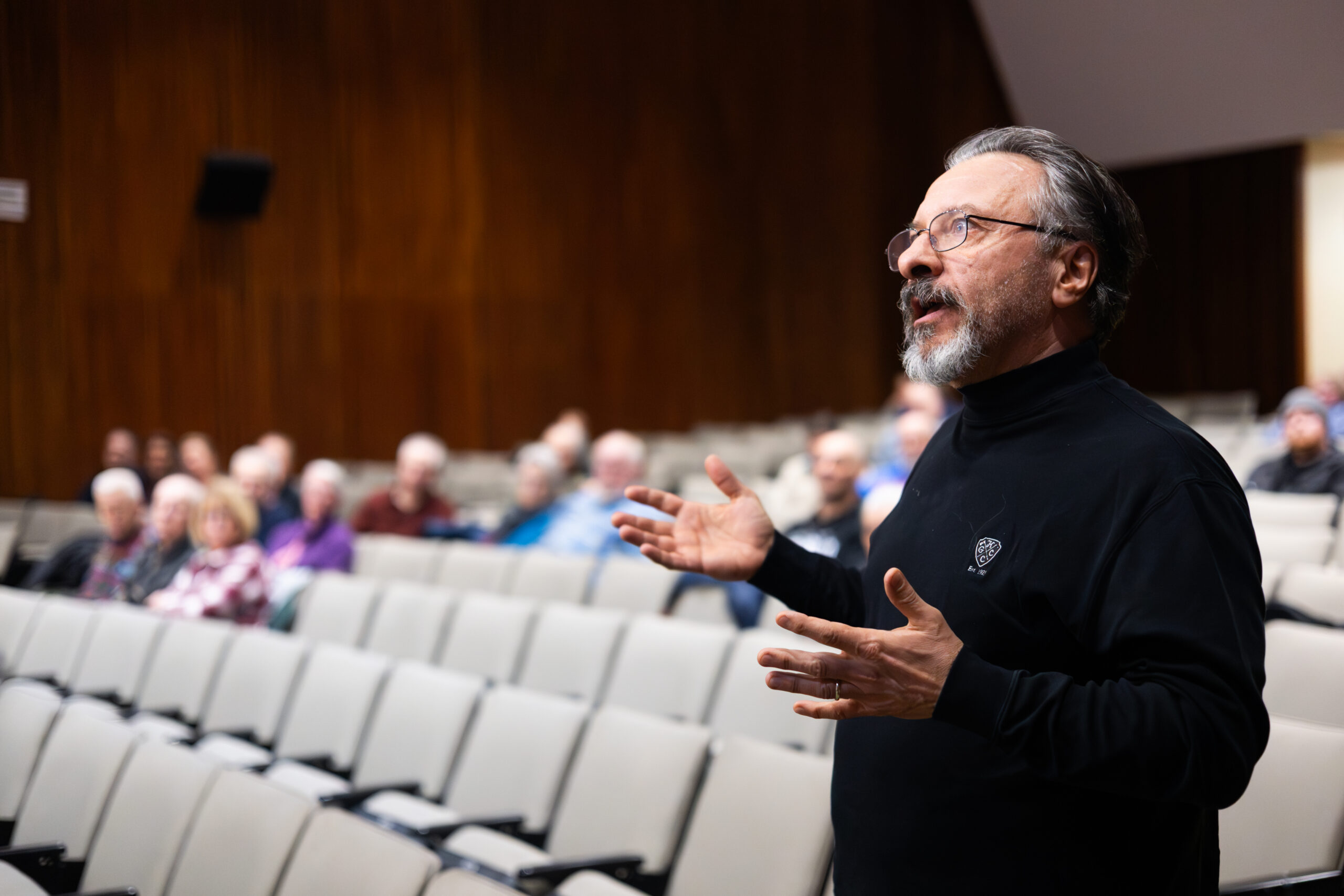
“The film had a lot of robust historical information. But then it seemed to carry a negative connotation toward solar, with some facts that weren’t really elaborated on.
Other countries like Germany are up to 20–40% of their energy from renewables. I think you could have done a deeper dive into the facts of solar in Delaware County — it’s not something that just came around last week. Are they a positive or negative impact? Is solar doing what it’s supposed to be doing? Is it making the grid better? Is it lowering our bills?”
– Frank from Hamden
“Those are really great questions to be asking, and I’d encourage you to look into it for yourself. What I have researched: solar panels are not very good for the grid. They can’t be controlled — you can’t tell the sun to turn on. You can say ‘we need more gas, more coal, more hydro’ — those are things you can control. Solar adds a level of instability that makes the grid harder to run. Engineers will tell you all about this.
On Germany: their leadership just admitted that shutting down all their nuclear energy was a massive mistake. Pound for pound, nuclear is the best energy. To get the same amount of energy from solar you need to cover massive amounts of wildlife habitat, whereas a nuclear plant takes a tiny spot.
Nuclear plants create excellent, generational, technically skilled jobs that people feel proud to work at. With solar panels and wind turbines, nobody needs to operate them. With a nuclear plant you need a whole team of highly educated people. It’s an incredible leap — it’s carbonless, emission-free, clean.”
– Fox Green, New York Energy Alliance
The Myth of Pure Mountain Water

“As far as I understand, most of the Northeast cities have a combined storm and sewer system, so they’re dumping sewage effluent as well as rainwater when their tanks overflow directly into the rivers. That includes in the Catskills. If they’re doing that anyway, how can New York City claim they’re getting fresh water from here? Why does it matter whether they filter it or not? At that point, you’re drinking the same wastewater from animals and from people.”
I just don’t understand what the big deal is. The whole fight between New York City and Delaware County seems to hinge on the idea of unfiltered water, but whether they filter it or not, they’re still pulling the water anyway.”
– An Engineer
“It doesn’t make sense from an engineering standpoint, does it? It’s a political question.
Why can’t the Catskills develop? Because New York City’s water has to stay pure in the mountains where all the fairies live.’ But that’s not true, as you see firsthand as an engineer.
Now the situation’s changing and they can no longer keep up this fiction. Just like Burr did with the Manhattan Water Company: people are catching on. So let’s fix problems. Hamilton’s system, the public financing of great infrastructure projects, is still the model: there’s a scientific solution that can uplift everybody, both the host community and New York City.”
– Fox Green, New York Energy Alliance
Where Will Our Power Come From?

“One of the reasons our electric bills are going up all over the country is to prepare for AI — solar fields, data centers, all of these things. We’re being told we’ll need 30–50% more power than the grids can currently give.
People are knocking on farmers’ doors constantly asking to buy land. Almost half our land in the Catskills has already been bought. Our communities need to be more a part of the decisions. When are you showing this film again? I have lots of friends who would be interested.”
– Louise from Hamden
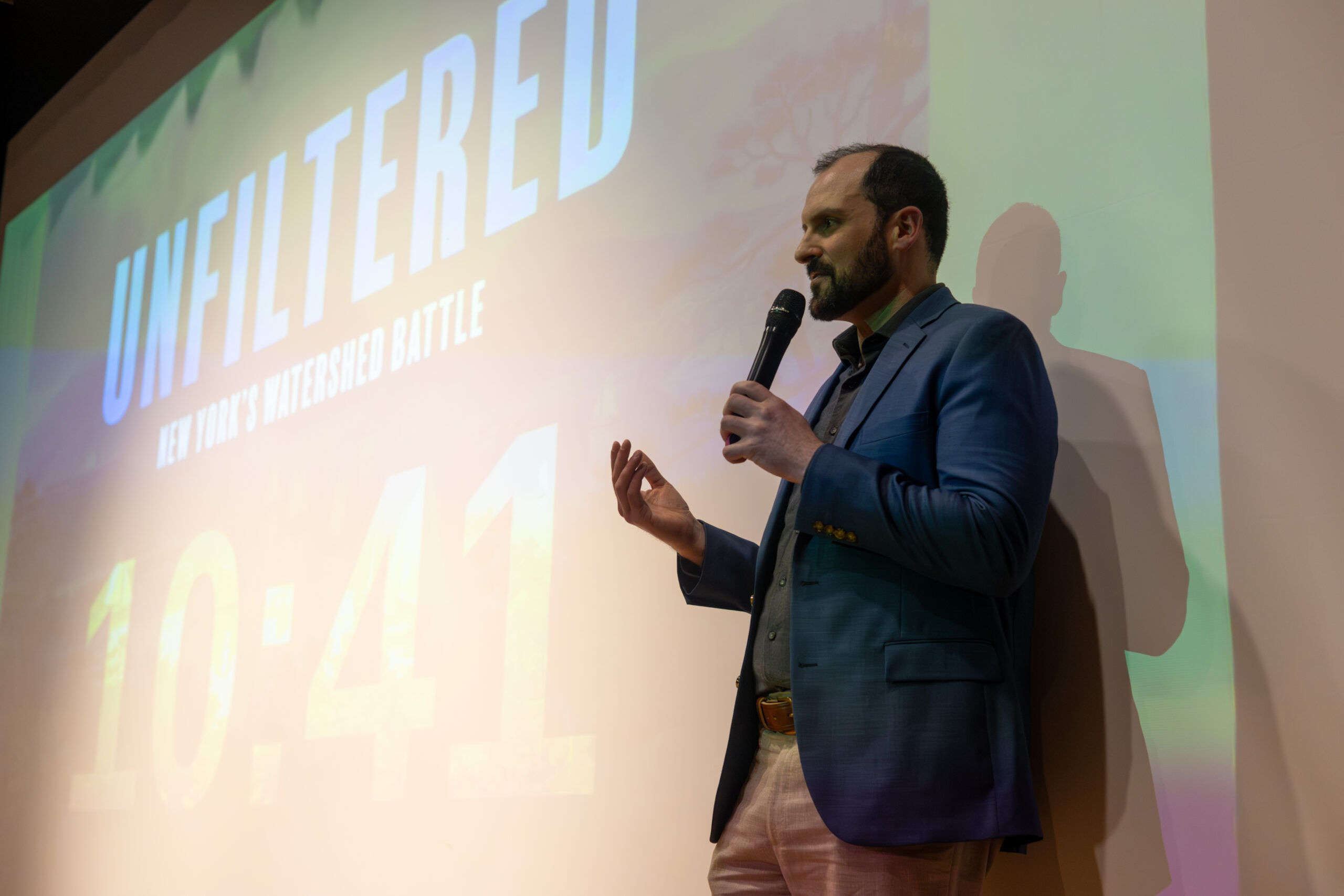
“When a town is disempowered for so long, and people think ‘as long as we get the tax bill from New York City, we’re good,’ and that compounds over decades, then when these pressures come, there’s no local sovereignty to respond. We’re not here to sell a solution; we’re here to bring people up to speed on the history and get these conversations going.”
– Alex Panagiotopoulos, New York Energy Alliance
Small Towns Left Behind

“I want to take you outside of Delaware County for a moment. There’s another issue in New York State besides the reservoir thing: electricity. In 2000, the first industrial wind farm built in New York State was the Madison Wind Farm — 12 Vestas wind turbines, 300 feet tall. In their 25 years of operating, the area did not get a single megawatt of power from those wind turbines. Only the landowners got a little coin for having them on their land. Those turbines also sat idle for four years before being torn down at the end of their life cycle.
All that wind power was shipped to New York City — just like the watershed water is dammed up and the benefits go to New York City while small towns in the Catskills are left behind.”
– Brian from Delhi

“We want to do economic development and energy and water projects that work for the host community and also work for the beneficiary. The only way to do that is if you’re somehow transforming or adding value to the thing being sent downstate.
The dairy farms are the perfect historical example. Nobody ever said ‘they’re taking our milk’ — we said ‘please take our milk, give us money for it.’ We’re selling it, building generational wealth, and people love milk. We want to find the milk of the 21st century and sell it to the benefit of this region.”
– Alex Panagiotopoulos, New York Energy Alliance
What’s Next?
Over 125 people have come to our first two screenings in Oneonta and Delhi, and a number of people have attended both. The events have had high rates of audience participation, with discussions that have involved farmers, engineers, utility stakeholders, local politicians and officials, artists, homeowners, and students.
With a firm grounding in our region and nation’s history, the discussion can be of a high quality: the horizon of possibilities is zoomed out to decades and centuries, and not just the proposal of the day.
More screenings are being organized. The next one is on March 21 at the Phoenicia Playhouse. To stay in the loop, sign up for the email list on the footer of our website.
Thank you to SUNY Delhi’s Environmental Studies and Sustainability Club for hosting us, and to SUNY Delhi’s Director of Human Resources, Marketing & Meal Plans Christina Viafore for helping make the event happen. Photo credits go to Irina Zollars.