
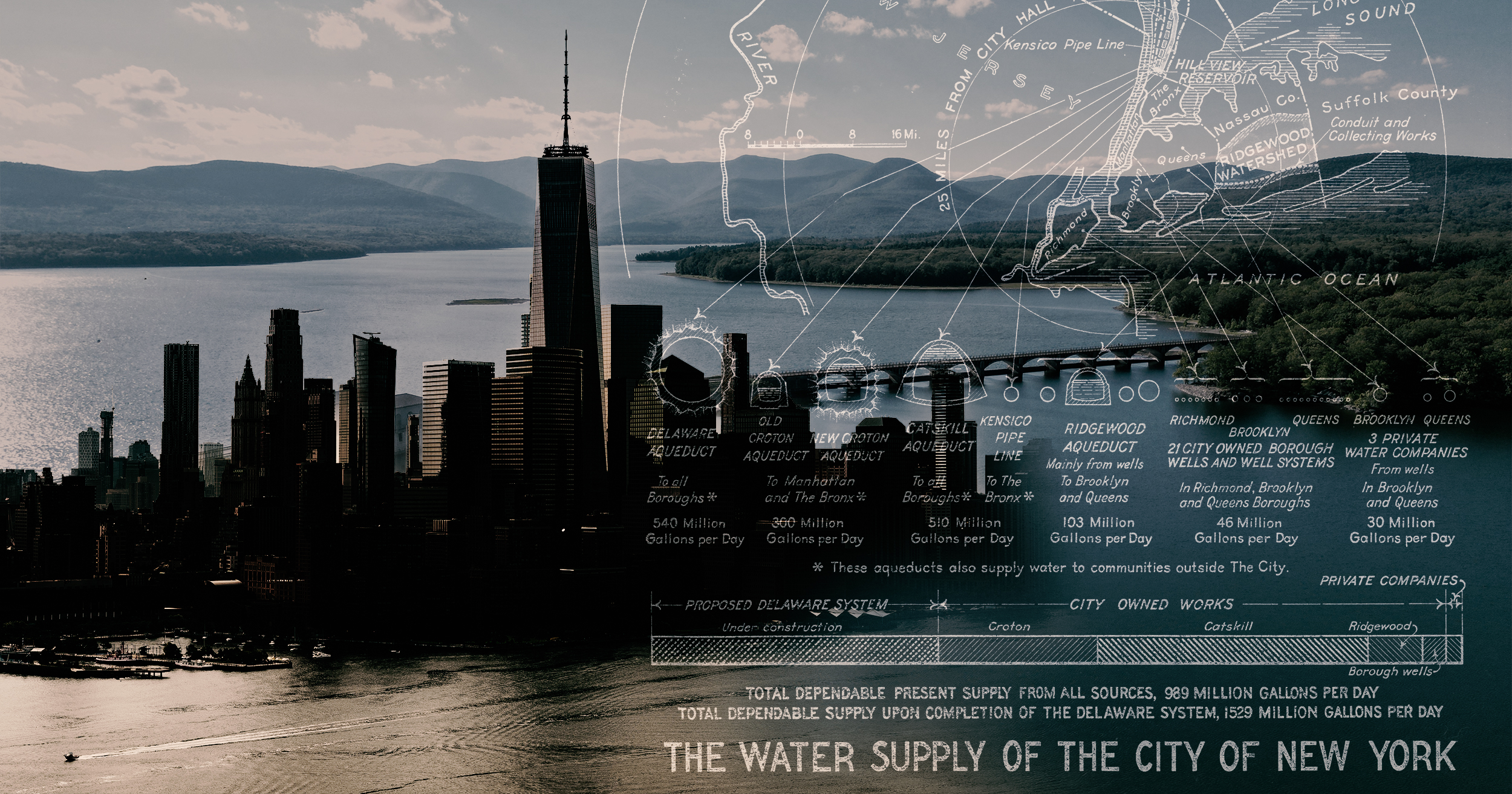
For more than a century, New York City has outsourced a massive infrastructure need to the Catskills: not only storing its water supply, but naturally filtering it by freezing development across an entire region. Since 1916, hundreds of thousands of acres were purchased outright or locked into conservation easements to make that system work.
Even as New York City continues to buy land, that arrangement has begun to break down. New York City is openly preparing for the loss of its Filtration Avoidance Determination, a transition that will require a permanent, energy-intensive filtration system operating around the clock. This coincides with the city’s push toward net-zero and renewable energy policies.
In a new deal between New York City and Delaware County, the land that was once deemed too precious to develop has now been opened up to a specific kind of development: renewable energy projects.
With an incoming mayor who has openly called for a massive expansion of publicly built solar and wind energy upstate, the question facing the Catskills is no longer theoretical: how much of the region will be transformed as New York City shifts from protecting water to pursuing renewable energy goals?
What does a rational, win-win energy plan look like for the Catskills, New York City and the state as a whole? Join us on January 17, 2026 at the Foothills Performing Arts Center in Oneonta to be part of the conversation. Register now.
What the Filtration Avoidance Agreement Has Meant
It was once assumed that water filtration was an inevitable part of the Catskills Aqueduct to New York City.
“Before the water reaches the city it is practically sterilized and the gas is entirely neutralized and dissipated. In addition to this, there is a provision for a filtration plant two miles below the Kensico Reservoir. Every precaution is thus taken to insure the purity and palatability of the water.”
Scientific American, October 27, 1917
But the filtration plant was seen as a finishing touch of the project, which made it easy to delay.
“There remains several pieces of work to be completed, such as the building of a filtration plant, which will take six years more, etc.”
Charles N. Chadwick, Commissioner of the Board of Water Supply, The Chat, April 7, 1917
Most major cities in the world filter their water supply to offset the effects of runoff and water-borne illnesses. Filtration plants are an example of technology that allows host communities to benefit and develop alongside mega-infrastructure projects like the New York City water system. But despite the intentions of the city to build a plant, they were laid asunder by the ultra-elite Merchants Association of New York’s Committee on Pollution.
The association, which existed between the late 1800s and 1930s, was made up of some of the most elite businessmen and financiers not just in New York City, but the world, including J.P. Morgan, Henry Morgenthau Sr., and Paul Warburg.

The Association’s Committee on Pollution was run by a man named Edward Hatch Jr., the heir to the Lord & Taylor business empire. He was nationally prominent as an opponent against what seemed, on the surface, to be an epidemic of careless pollution of rivers and lakes.
However, he and the Merchants Association did not believe in engineering solutions to divert or manage pollution, or to treat water once it was polluted. People who ran filtering plants were “incompetents,” as the “nature of the work is such that a man who can get any other position will not accept the job of operating one of these plants… the plants are, therefore, under the management of men who haven’t the intelligence to run them.”
“What we hope to do… is to prevent any increase of the population within the watershed, and, taking every precaution, meanwhile, wait until the present population dwindles to nothing,” said Hatch in 1915. “Our ultimate hope is to see the watershed absolutely free from human dwellings, for so long as people live there the water will be more or less polluted.”
Thus, Hatch’s fight for “pure water” was built with a cruel Malthusian calculus. “There is only one thing to do,” he said, “keep to, its lowest possible limit, the population within the watershed. That is the aim of my committee and we will oppose any effort to add one home or institution to the watershed territory.”
A 1914 proposal to build a 6,000 person Mohansic State Hospital, an insane asylum, and the 800-person New York Training School for Boys, a juvenile detention center, on the edge of New York’s Croton Lake watershed in Westchester, were in Hatch and Morgan’s crosshairs. Working with Tammany Hall politicians like State Senator Robert Wagner, they pushed an attack against the facilities that would set the stage for the next century of watershed relations.
The issues of sewage and runoff could not be solved with filtration or engineering, the Association claimed. The only solution was to ban the building of institutions in the watershed.
“The Merchants Association of New York, and officials of that city, appeared in favor of the bills which would prevent completion of the institutions at Mohansic Lake… opposed by representatives of Westchester, Ulster, Putnam and Greene counties, which are most directly affected.
Senator Slater of Westchester predicted that the Wagner bills, if passed, would depopulate his county and were intended for that purpose, that the removal of the institutions would be followed by an attempt to remove county institutions and eventually the dwellings on the watershed.
…
Rumors in Ulster County, said [County Attorney] Mr. Eckert, were to the effect that the City of New York… was trying to purchase lands above the Ashokan Reservoir, and the present bills were introduced at the request of some department of the city to make life so unpleasant in Ulster County that owners… would be glad to get out of that section at any price.”
The Daily Freeman, February 25, 1916
State Senator George A. Slater, of Westchester, went up against some of the most powerful people in New York City on the behalf of the Catskills region. “The principles involved will apply to every watershed in the State,” he said. “New York City should filter its water supply… that is the perfect answer to the question: not driving everyone from the watershed, but treating the water.”
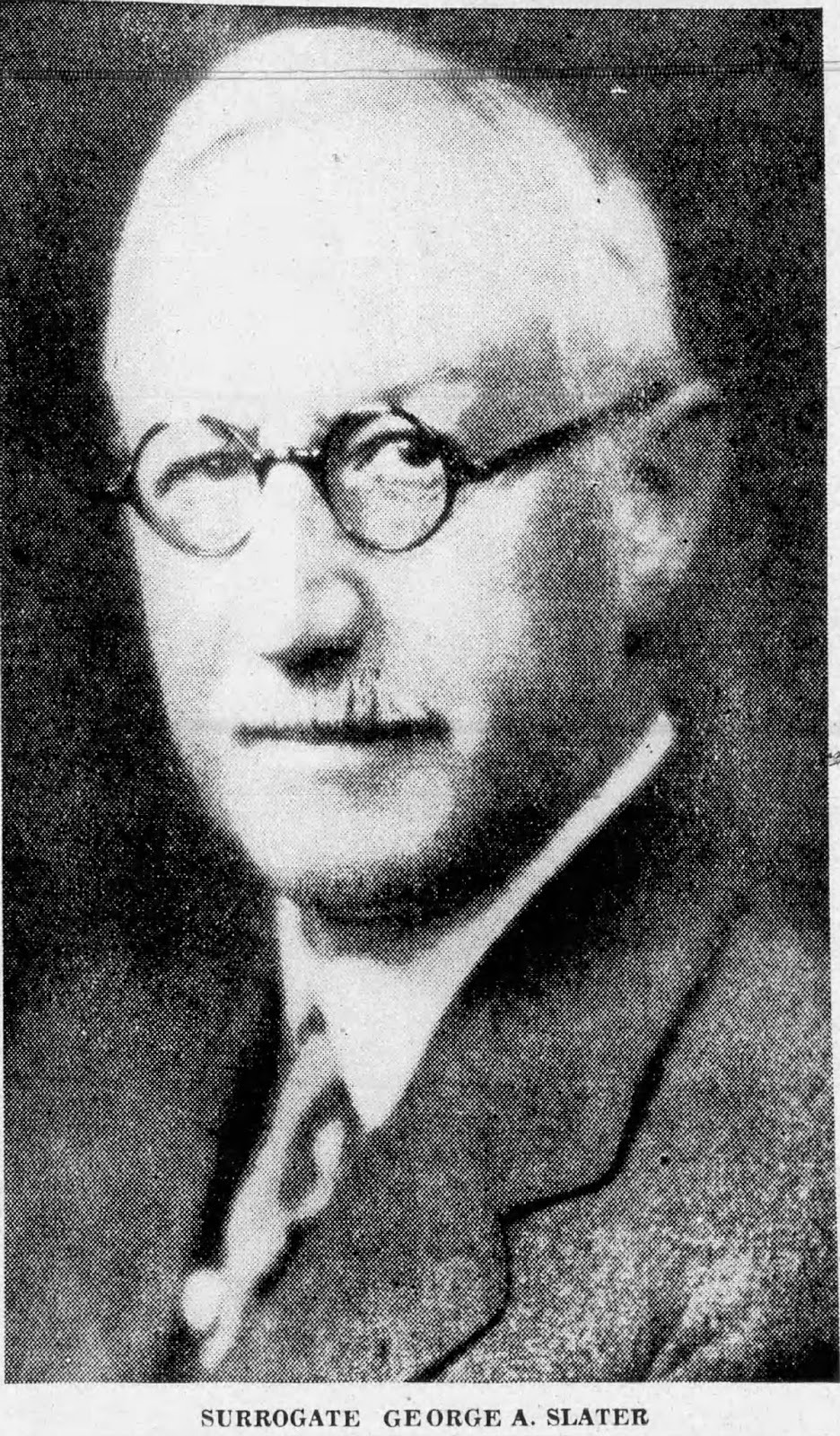
However, Slater was up against an emerging governing philosophy: the myth of “pure” mountain water. As one opponent put it, “we gave $300M for pure water and want it, and not what you are satisfied with.”
By 1918, New York Governor Whitman signed a bill to turn the site of the hospital and school into a protected state park known as Mohansic Lake Reservation.
The precedent was therefore set: protecting New York City’s water supply was a zero-sum game. The city’s financial and commercial interests, paired with Tammany Hall, could easily overpower any upstate opponent to control land use, population and economic activity. Engineering solutions became politically dangerous; if water could be reliably treated, the moral and regulatory justification for freezing development for a century would collapse.
This premise hardened into doctrine, quietly baked into land acquisitions, easements, and intergovernmental agreements that transformed the Catskills into an extension of the city’s infrastructure, rather than a region with its own development future. While New York City’s population grew by 50% over the last century, Delaware County, the host of much of its water infrastructure, has slightly lost population.
“New York City… they feel, I guess, that in the watershed they have to restrict development, which is a very touchy situation.”
Olive Town Supervisor Berndt Leifeld, 1990
Filtration Avoidance as Governing Doctrine
This trend continued, largely uninterrupted, until the mid 1980s. In 1986, Congress amended the Safe Drinking Water Act, requiring filtration for most cities’ surface water systems in response to persistent outbreaks of waterborne disease. Filtration was meant to become the norm. Avoiding it was allowed only as a conditional exception, delegated to federal regulators.
That exception was formalized three years later, when the Environmental Protection Agency issued the Surface Water Treatment Rule. The rule created what became known as the Filtration Avoidance Determination (FAD): a revocable administrative finding that filtration could be deferred only if a water system could prove extraordinary source-water protection, enforce strict land-use controls, and continuously demonstrate compliance.
This meant that the city’s approach to protecting its unfiltered water now had to meet a certain level of scientific, rather than purely political, rigor. It led to a $5B showdown between the emergent Coalition of Watershed Towns (CWT) and the financially unstable New York City. The CWT, tired of being pushed around for decades, had a bargaining chip: if they obstructed the city’s efforts to get a FAD, they could force the city to build a filtration plant and finally unlock development in the Catskills from its slumber.
A third party to the negotiations, led by Robert F. Kennedy Jr., soon entered the fray. Environmental groups like the National Resources Defense Fund and Riverkeeper greatly valued the biodiversity and untouched nature of the city-owned watershed lands. Kennedy Jr. advanced a vision for the region as a form of “enforced ruralization.”
“Spending so much on filtration at a time when every level of government is crying poverty would no doubt undermine watershed protection… Filtration would also foster a sense that watershed protection was unnecessary.”
Riverkeeper, The Legend of City Water (1991)
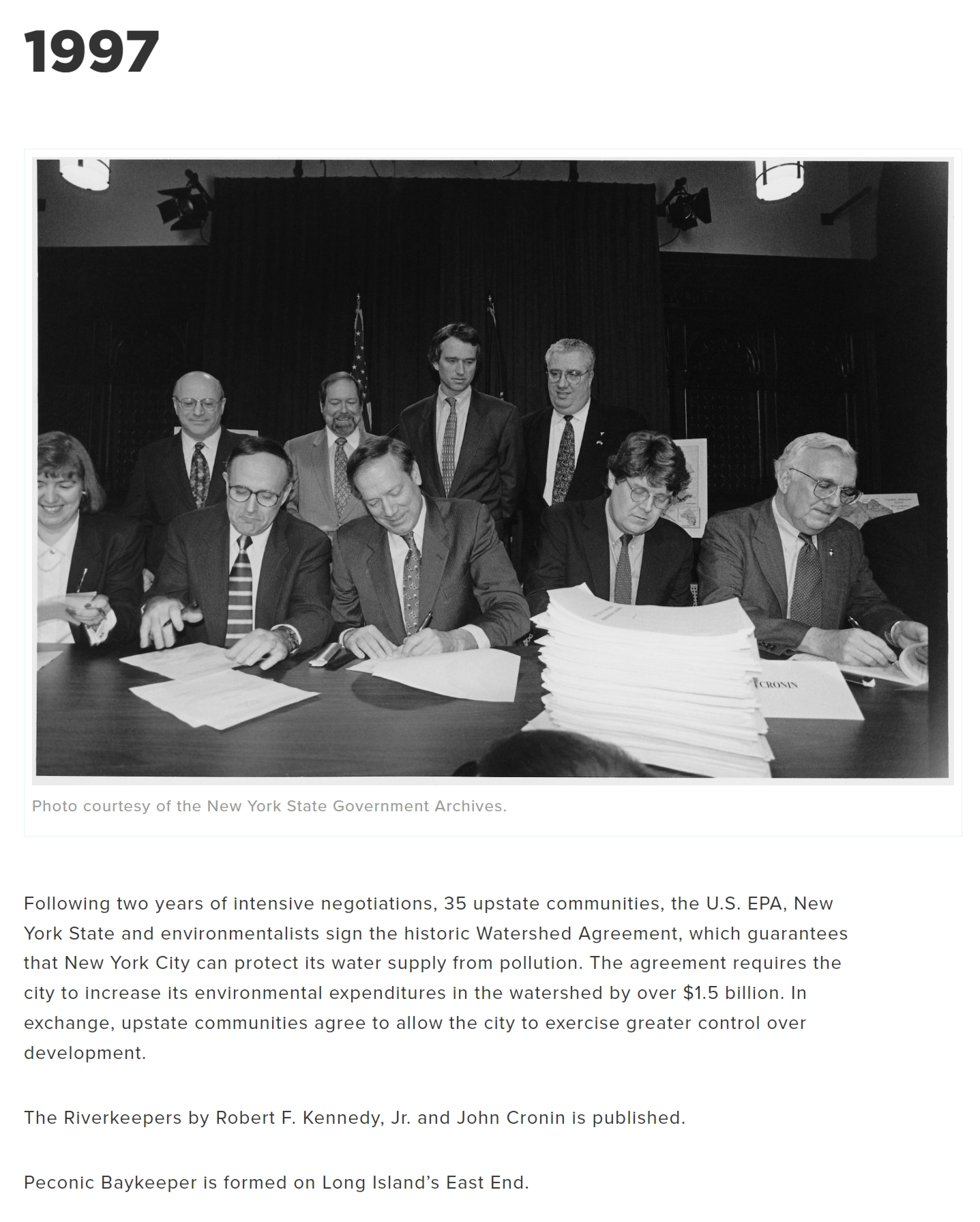
In other words, the success of filtration would threaten the legitimacy of the land-use regime built around avoiding it. Once water was treated, the justification for freezing development across an entire region would weaken. The delicate political consensus holding the watershed regime together would fracture. Ultimately, the CWT, New York City, and the environmental groups reached a Memorandum of Agreement in 1997.
By 2024, New York City directly owned or controlled more than 214,000 acres of land and easements in the Catskill–Delaware watershed, over 20% of the entire basin. New York State owned an additional 210,000 acres, bringing total publicly owned or permanently protected land to approximately 434,000 acres, or over 41% of the watershed. Within that footprint lay nearly 74% of all wetlands, 63% of mapped floodplains, and more than 36% of riparian buffer corridors.
Filtration Was Deferred, Not Avoided
In 2005, environmental philosopher Mark Sagoff dismantled what he called the “Catskills Parable,” the idea that preserved wilderness was superior to human filtration. Rainwater, Sagoff noted, is already nearly distilled; pathogens are introduced by human and animal activity, not removed by forests.
The acreage targets embedded in the watershed program, he concluded, were not derived from hydrology or microbiology, but from politics.

Indeed, independent reviewers have found that, even after decades of watershed protection, turbidity and nutrients remain the dominant water‑quality threats to the Catskill–Delaware supply, with turbidity judged a “top priority” and phosphorus the “second priority” pollutant for New York City’s drinking water. In Cannonsville Reservoir in particular, detailed analysis by the National Academies shows the trophic state index improving after wastewater upgrades and then “creeping back into the eutrophic range” in the most recent years of record, indicating a renewed trend toward more nutrient‑rich, algae‑prone conditions despite existing controls.
In recent years, New York City planning documents, capital plans, and DEP testimony have stopped describing filtration as a remote contingency and begun treating it as an eventual inevitability. The language has shifted from if to when.
One of the most important impacts on DEP’s decarbonization efforts is the possibility of having to build a Catskill-Delaware filtration plant in the coming decades. Should DEP’s Filtration Avoidance Determination (FAD) be undermined by a combination of climate change, wildlife driven fecal coliform contamination, microbial and disinfection byproducts regulations, and standards for emerging contaminants, it would require the swift construction of a water filtration plant. This would create a significant increase in DEP’s energy consumption. Further, such an event would likely injure public confidence in New York City drinking water. This is why we are proactively planning in earnest for the eventuality of Catskill-Delaware filtration, even as we continue to work to extend the life of the FAD.
NYC DEP Long-Range Vision, 2025
Once filtration becomes inevitable, the question shifts. It is no longer how much land must be protected to avoid filtration, but what purpose that land will serve once filtration arrives. That question collides directly with a second commitment New York City has made: that its agencies will pursue “energy-neutral” or net-zero operations, relying heavily on renewable generation from solar and wind.
From Water Stewards to Renewable Developers
The Department of Environmental Protection, historically defined by its role as a steward of the Catskills watershed, is now increasingly positioning itself as a renewable energy developer, tasked not only with delivering clean water but with helping meet the city’s climate and decarbonization mandates.
No figure embodies that transition more clearly than Rohit “Rit” Aggarwala. In addition to serving as DEP Commissioner, Aggarwala has simultaneously acted as New York City’s climate czar, a leading advocate of aggressive building decarbonization policies like Local Law 97, and a proponent of using artificial intelligence and streamlined permitting to replace local decisionmaking for renewable energy projects. The dual role matters: it collapses the boundary between water management and energy policy inside a single office.

Aggarala helps explain a development that, to many watershed communities, appeared to come out of nowhere. In the most recent negotiations between NYC DEP and the Coalition of Watershed Towns, long-standing environmental groups were excluded from the process. The reason was not subtle: those groups were expected to object to a buildout of solar energy infrastructure on wetlands and watershed lands owned by New York City.
By the time those negotiations occurred, DEP’s priorities had already been laid out in writing. In its June 2025 Long-Range Vision, DEP identifies “producing renewable energy by using DEP assets to support solar production, battery storage, and heat recovery” as a strategic objective. The report frames DEP not merely as a regulator or land steward, but as the holder of “huge untapped resources for renewable energy production,” noting that the agency owns approximately 182,000 acres of land, some of which “could host solar installations.”
Finally, we need to leverage all our opportunities to generate renewable power – utilizing water pressure to generate electricity, capturing waste heat from treatment processes, and using our watershed lands for watershed safe solar and hydropower development.
This shift is not occurring in isolation. DEP openly acknowledges that one of the largest threats to its decarbonization strategy is the eventual loss of the Catskill-Delaware Filtration Avoidance Determination. Should filtration become unavoidable due to wildlife-driven fecal contamination, tightening microbial standards, or emerging contaminant regulations, the city would be forced to construct a filtration plant of unprecedented scale, which could require somewhere around 150 MW of 24/7 electricity.
At that scale, intermittent renewable generation cannot support the system without both a massive overbuild of storage and new long-distance transmission infrastructure, expensive infrastructure that does not currently exist anywhere in New York State. The implication is unavoidable: once filtration becomes inevitable, the watershed lands that once justified avoiding it are no longer passive buffers. They become energy assets.
Seen in that light, the exclusion of environmental groups from recent watershed negotiations was a signal. New York City moving away from organizing its Catskills landholdings around the avoidance of filtration. It is shifting to organizing them around the energy demands of a solar and battery-powered filtration system.
The Deal That Quietly Changed the Rules
This shift in policy is reflected in the latest negotiated agreement between New York City and the Delaware County Board of Supervisors, hailed in the local press as the beginning of a “New Watershed Era.” Among other changes, the deal formally replaces the Land Acquisition Program in Delaware County with a system of land swaps, even as land acquisition continues in other watershed counties such as Ulster.

More significantly, the agreement introduces a new framework for renewable energy development on city-owned land, marking a clear departure from the historical premise that watershed land exists primarily to avoid development.
“Delaware County and the City (including DEP) agree to explore partnership opportunities on renewable energy projects on City-owned property within Delaware County…”
The passage continues by listing shared objectives like electrification, affordability, farmland protection, storm resilience, and water quality, before emphasizing cooperation, efficiency, and expedited timelines.
Crucially, many of the constraints discussed during public meetings never make it into the final text.
During negotiations, Coalition of Watershed Towns meeting minutes reflect repeated assurances that renewable projects would be “community-scale,” that tree clearing would be limited, and that towns would retain meaningful review authority through local planning boards. Specific figures, such as two-to five-acre tree-clearing caps and heightened scrutiny, were discussed, but none of those limits are codified in the agreement itself.
Instead, enforcement and implementation are deferred to future regulatory processes, principally through DEC permitting frameworks, which in turn intersect with state siting authorities that can supersede local control under certain conditions. In effect, the agreement resolves today’s political conflict by postponing tomorrow’s land-use decisions.
Land that once justified as a passive buffer against filtration will not be sold back to the host communities, but rather, is now considered a massive energy asset for the city.
What the Negotiations Assumed, and What They Didn’t
At the time the deal was announced, two critical assumptions were left out of how it was presented to the public.
The first was an implicit belief that renewable energy development on city-owned land would remain small, local, and constrained by existing transmission limits. As Coalition of Watershed Towns President Ric Coombe explained, any solar development envisioned by the DEP was intended to be community-scale, used locally, and limited by the inability of current transmission infrastructure to carry power long distances.
In a previous conversation with DEP Commissioner Rohit Aggarwala, Coombe reported it is DEPs intent to permit community solar operations to benefit local residents. “Maybe there is a twist,” Coomb noted, but current transmission lines can’t transport solar energy well and it is best used locally. It is a mutual benefit because the initiative would also support the State’s zero emissions goals, he added.
The Schoharie News, December 19, 2024
At the time of that remark, the proposed 5 GW, 175-mile Clean Path NY renewable transmission line proposed from Delhi, NY (in Delaware County) to Queens was on life support. If renewables were going to be built in Delaware County, there was no confirmed way to actually get the electricity to New York City.
But Clean Path NY continues on, without a name. The state has continued advancing long-horizon transmission planning through the Energy Policy Planning Advisory Council (EPPAC), a body tasked with identifying future grid needs to meet climate mandates. While EPPAC materials avoid project-specific announcements, they make one thing unmistakably clear: New York State is actively planning for major new transmission capacity to move large volumes of power from upstate generation zones to downstate load centers.

And while watershed towns were debating assurances about “community-scale” solar and local review, New York City was already working upstream, inside Albany’s permitting process, to smooth the path for renewable development in regulated wetlands.
In March 2025, the New York City Law Department submitted formal comments on the state’s proposed Community-Scale Solar Energy Installations General Permit, a new DEC framework designed to streamline solar development in wetlands and wetland-adjacent areas. The letter notes that, within the New York City watershed, the City owns “over 160,000 acres of land, in fee simple and through conservation easements,” and acts “both as a regulator and a regulated entity.” The City’s comments focus on implementation details like road widths, vegetation clearing, grading, and mitigation ratios, effectively treating solar development in wetlands as a given.
The Mamdani Factor
Second, the negotiations took place at the tail-end of Rohit Aggarwala’s tenure with the NYC DEP. Since the creation of the DEP in 1978, every mayoral administration, from Eric Adams, to Bill De Blasio, all the way back to Ed Koch, has featured at least one turnover in DEP commissioner. By June of 2025, Aggarwala must have known that he wasn’t long for this job; but curiously, he aggressively negotiated to open up the right for the city to develop renewables on its land.
Aggarwala’s administration framed renewable siting in careful, incremental terms: community-scale, locally used, transmission-limited. Those assurances shaped how watershed leaders and residents interpreted the agreement. But agreements written during leadership transitions are always vulnerable to reinterpretation, especially when they codify permissions without binding limits.
As of late 2025, it remains unknown who Mayor-elect Zohran Mamdani will appoint as the next DEP Commissioner or Chief Climate Officer. What is known is Mamdani’s legislative record, his public statements, and the composition of his Transportation, Climate, and Infrastructure transition team, all of which point toward an aggressive, centralized push for publicly built renewable energy.
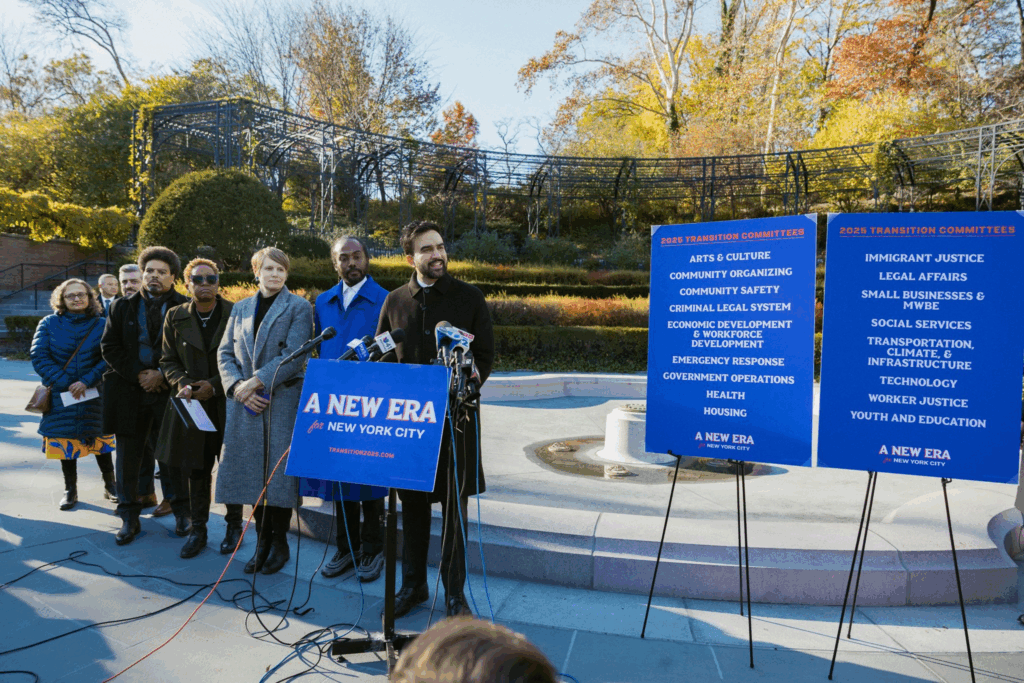
Mamdani is a prominent advocate of the Build Public Renewables Act (BPRA), which directs the New York Power Authority to build 15 gigawatts of public renewable generation by 2030. In its most recent strategic plan, NYPA states that it is:
“Exploring opportunities to utilize publicly owned land for renewable energy generation projects,” including “partnerships, greenfield development, distributed energy resources, community solar, creative off-balance-sheet ownership structures, and NYPA-enabled projects at customer or public sites.”
The report’s language is deliberately broad, and emphasizes access to land that is “inaccessible to the private sector.” As mayor of New York City, Mamdani will now oversee an administration that controls hundreds of thousands of acres of land upstate, with newly codified rights to build renewables on it.
Mamdani’s coalition that got him elected is eager to aggressively build solar energy in Upstate New York, no matter what “rural landowners” think.

The Responsibility We’ve Always Carried
The Catskills have never rejected responsibility. We have hosted canals, aqueducts, reservoirs, transmission corridors, farms, forests, and the physical burdens of New York City’s growth for more than a century. We understand what real infrastructure looks like because we live with it. Real infrastructure is durable, capital-intensive, engineered for reliability, and judged by whether it actually performs its intended function over decades, not by whether it satisfies symbolic targets or political fashions. That tradition is Hamiltonian in the strictest sense: power exists to expand the productive capacity of labor, to sustain industry, and to support a growing population. It is not ornamental. It is not speculative. And it does not treat land as disposable.
What we reject is a new round of underdevelopment disguised as climate virtue; projects that consume wetlands and public land, fracture communities, and still fail to deliver the baseload energy required for filtration, industry, or economic revival. The Catskills should not once again be reduced to a blank space on someone else’s planning map, asked to absorb land-intensive projects that solve no hard engineering problem. If New York City needs power, and it does, the question is whether it will pursue infrastructure that actually works, or repeat the mistake of substituting optics for substance. That is the question at stake now. And it is why we are convening this conversation on January 17 in Oneonta: not to oppose energy, but to insist on development worthy of the responsibility this region has carried for generations.
—

Catskills Energy Future is a public screening and conversation about a quiet but consequential shift in New York City’s infrastructure strategy. For decades, hundreds of thousands of acres in the Catskills were locked up to avoid building a filtration plant, freezing development across an entire region in the name of water protection. That era is on the verge of ending.
As filtration becomes an eventual engineering reality, the logic for holding vast tracts of upstate land is changing. New York City is no longer organizing its watershed around protecting water, but as a platform for renewable energy generation, battery storage, and future transmission, tying the Catskills directly to the city’s climate and power ambitions.
This transition is not without precedent. From the earliest days of the watershed system, influential voices argued that the only way to protect city water was to restrict population, suppress industry, and limit human presence in the Catskills altogether. The cold logic of treating people and productive land use as a threat rather than a resource has shaped a century of policy. Today, it risks reappearing in a new form: land preserved not for local prosperity, but for land-intensive infrastructure serving distant needs.
The evening features the world premiere of Unfiltered: New York’s Watershed Battle, followed by a moderated discussion and audience Q&A examining what this transition means for land use, grid reliability, workers, and local communities and whether the region will once again be asked to absorb the physical costs of New York City’s growth without a meaningful voice in the outcome.