
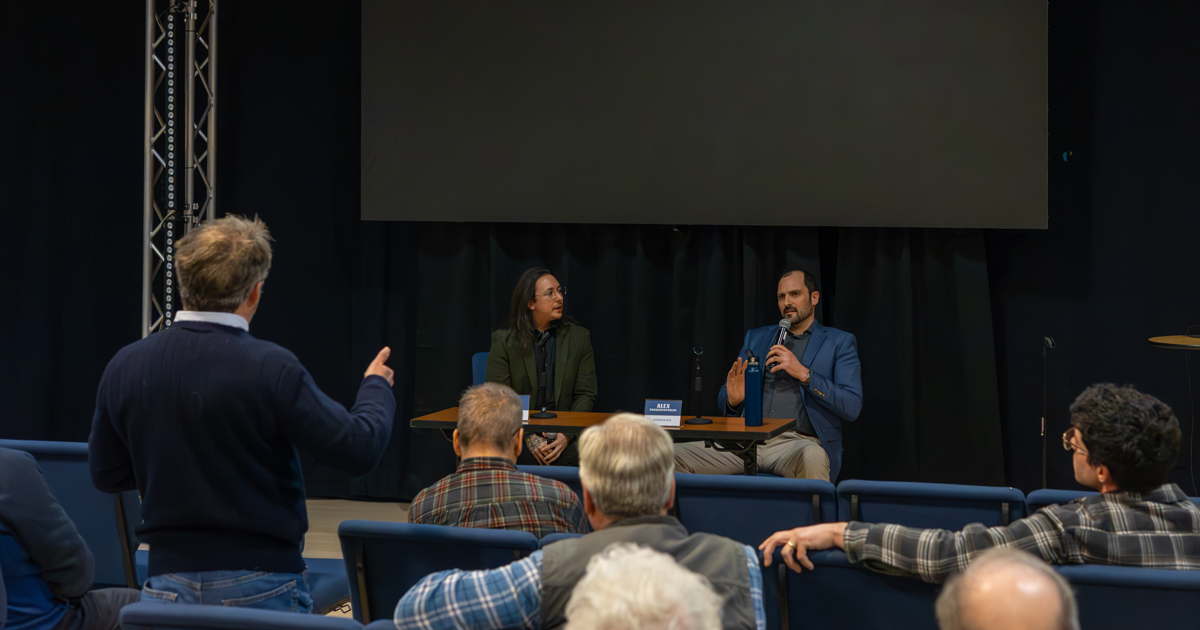
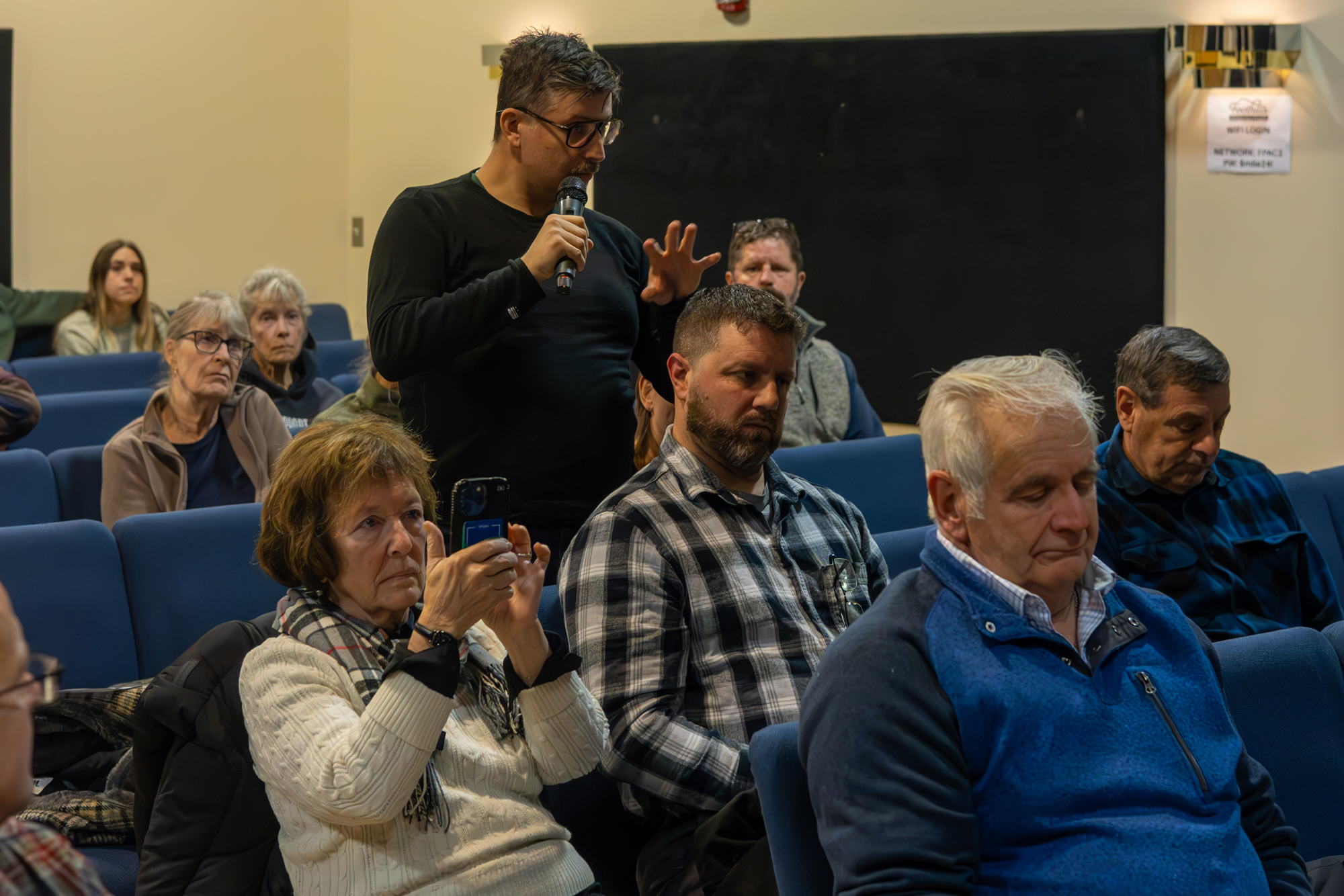
A snowy Saturday did little to thin the crowd at the Foothills Performing Arts Center in Oneonta, where more than 40 residents and officials gathered to discuss energy, land, and the future of the Catskills.
Until now, most public discussion about the watershed has been nostalgic, memorializing the communities and farms lost decades ago, without a thought toward what could be different in the future. It’s an outcome of the “depopulation plan” for the watershed region that was advanced over a century ago by New York City business elites, and continues to this day in more polite terms.
On January 17, 2026, that paradigm was challenged at Catskills Energy Future, an event hosted by New York Energy Alliance, with a screening of Unfiltered: New York’s Watershed Battle followed by an extended public discussion. The event came amid heightened regional attention to New York City’s shifting role in upstate land and energy planning, and it marked the first time these issues were debated face-to-face in a public forum.

The exchange that followed reflected many of the dynamics explored in the film. Residents brought up concerns about bureaucratic gridlock, land-use restrictions, and economic stagnation. Others argued from the paradoxical position of New York City; that restrictions protect precious nature and water, but that same nature should now be covered in solar panels to meet the state’s energy goals. Beneath these exchanges is a deeper disagreement about whether the region’s current trajectory represents stewardship, or a form of managed decline.
Gatekeepers Insist on an Adversarial Relationship
As the discussion unfolded, a clear fault line emerged between those who view the Catskills as a static nature preserve and those who see it as a place for human creativity, industry, and growth. One attendee accused the New York Energy Alliance of using “selective history” to inflame anti-New York City sentiment. Yet the most pessimistic view of the region’s future came not from the filmmakers, but from the local legal establishment itself.
Jeff Baker, longtime attorney for the Coalition of Watershed Towns, offered a defense of the existing bureaucratic regime and the latest renewables agreement with New York City in a dialogue with NYEA’s Fox Green. In doing so, he articulated a worldview characteristic of the region’s gatekeepers, those who seek to shut down criticism of the land-use status quo:
Baker: It is always going to be a constant battle between the upstate areas and the downstreet areas.
Green: Did you watch the film? Because no, it doesn’t have to be that way.
Baker: Yeah, it does.
Green: Why?
Baker: It’s human nature.
Green: Actually, no, that’s not human. That’s animal nature. That’s the law of the jungle.
Baker: We are animals.
Green: We’re not actually. We can grow our population beyond what any animal can do because we can harness technology. We’re creative. There are more people on this planet now than there were 100,000 years ago, right? We always push outside of the limits to our population, right? Our supposed limits of growth. Because we can come up with creative solutions. Because we can discover new forms of energy. Did nuclear energy exist 200 years ago when they were building the reservoir or the canal? No, but it’s here now.
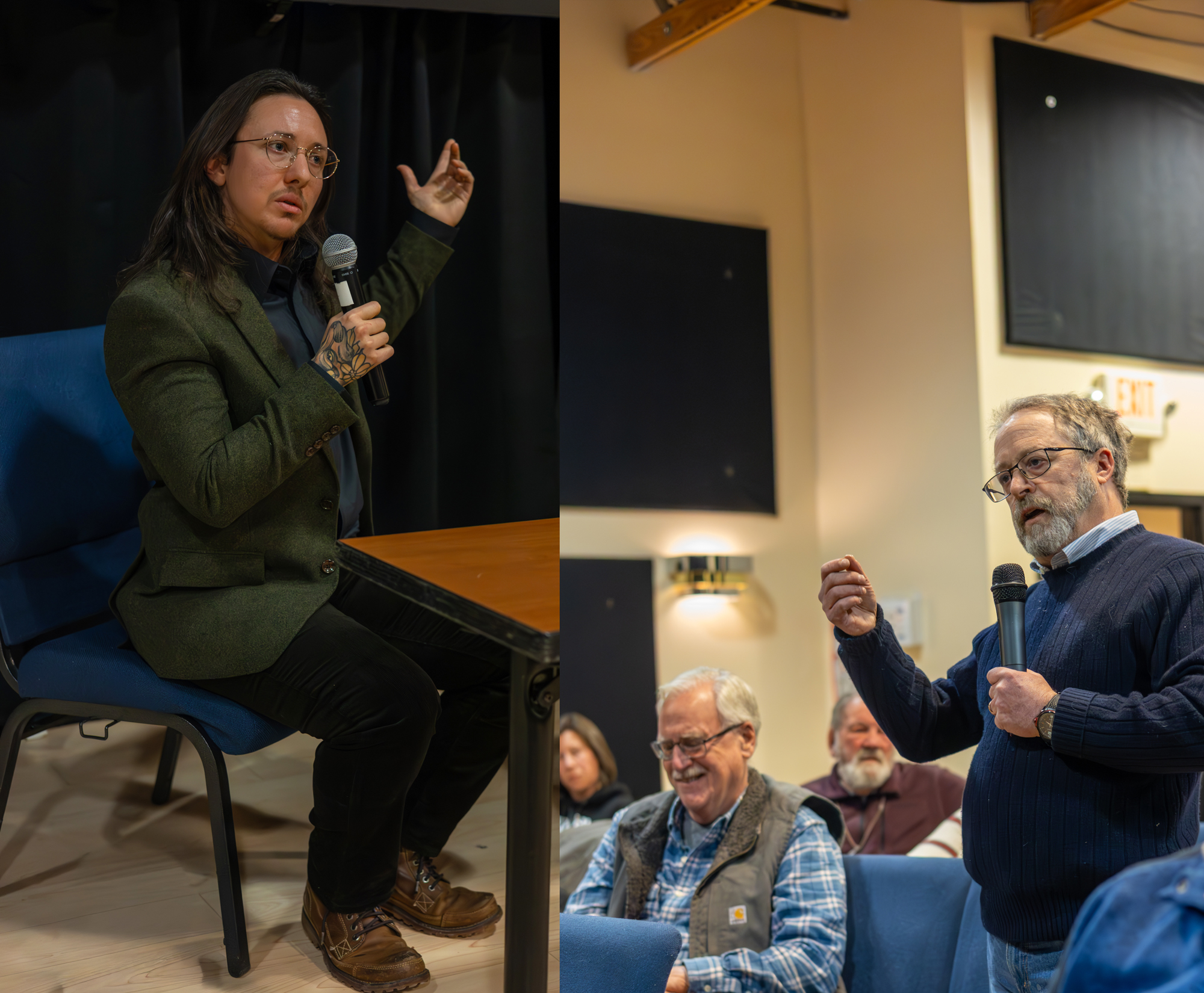
Baker’s assertion, that human beings are locked into a permanent, zero-sum struggle over resources, is the same logic that Alexander Hamilton rejected when he proposed securing New York City’s water supply from the Bronx River in 1799. It assumes that for the city to prosper, the countryside must stagnate; that for the city to have clean energy, rural regions must accept solar sprawl.
Unfiltered shatters this very premise, drawing upon examples of positive development where the needs of cities and host communities were served harmoniously. For example, Delaware County was on a subsistence farming level until the building of the New York and Erie Railroad by engineer John B. Jervis in the 1850s. It was this railroad that allowed the county to become the top dairy-producing region in the nation. Dairy farmers could get their product from Deposit to New York City in an overnight trip without spoilage.
Jervis was also behind great works like the Erie Canal and the Delaware and Hudson Canal, which both caused entire cities and towns to spring up around them, rather than choking host communities with restrictions and regulations. The building of the Cannonsville and Pepacton Reservoirs, followed by decades of implied and overt land use restrictions, later destroyed Delaware County’s dairy industry.
“Who Funds You?”
At several points during the discussion, attention was shifted away from a discussion of land use and energy policy and toward the motivations and backgrounds of the organizers themselves. One attendee repeatedly pressed the panel on funding sources and affiliations, returning to the question even after it had been answered.
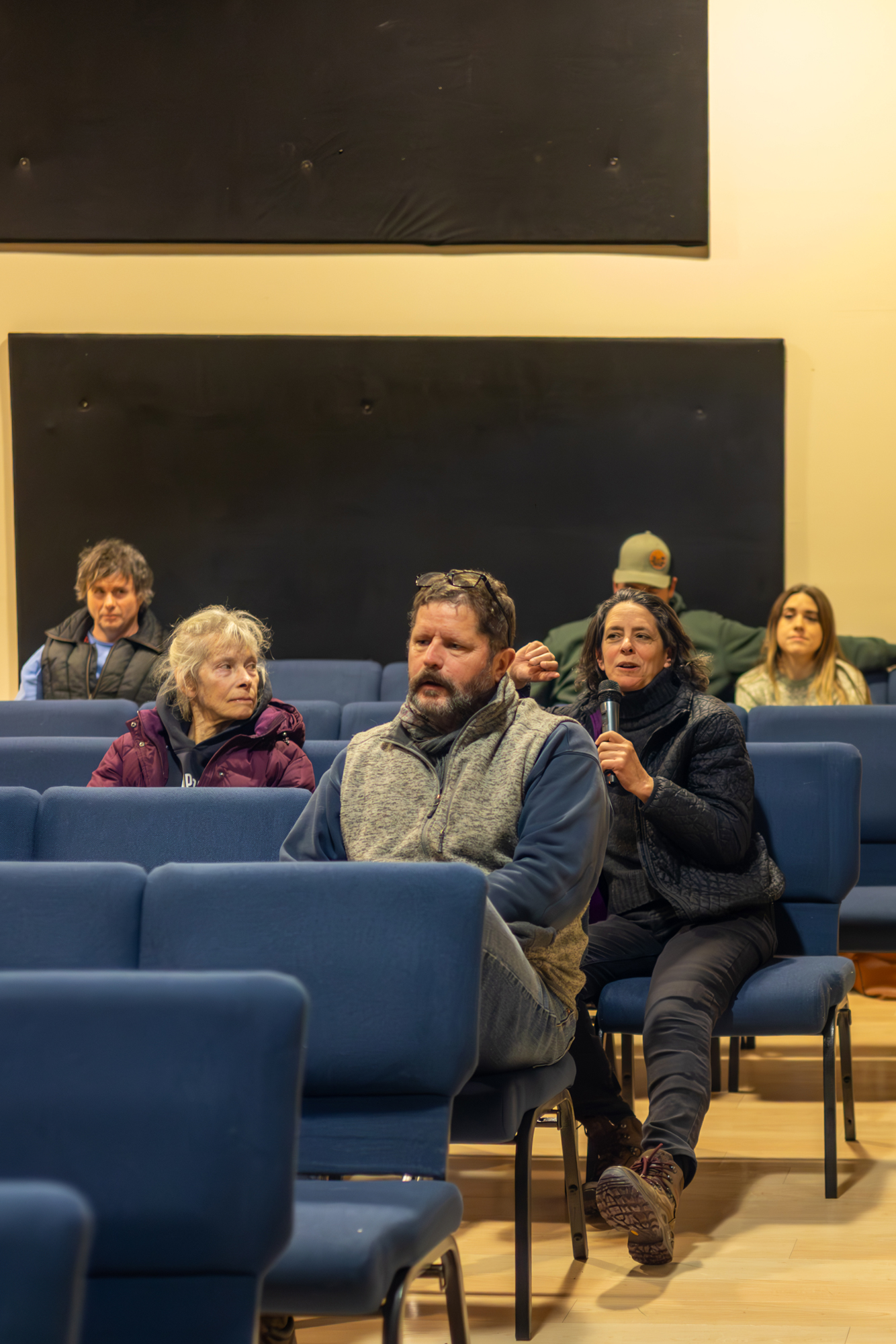
NYEA’s Fox Green met the question with transparency. “Nobody,” he replied. “We run a creative agency, and because we run our own business, we’re able to take the time to do this. We’re not a funded organization; we’re just three people who were frustrated with the paradigm.”
Rather than engaging with the historical record or the policy arguments presented, the questions treated the act of inquiry itself as evidence of hidden influence. The troubling implication was that critical analysis must have originated from “outside” interests, rather than from residents and local advocates.
Q&A Highlights
Energy That Runs When You Need It
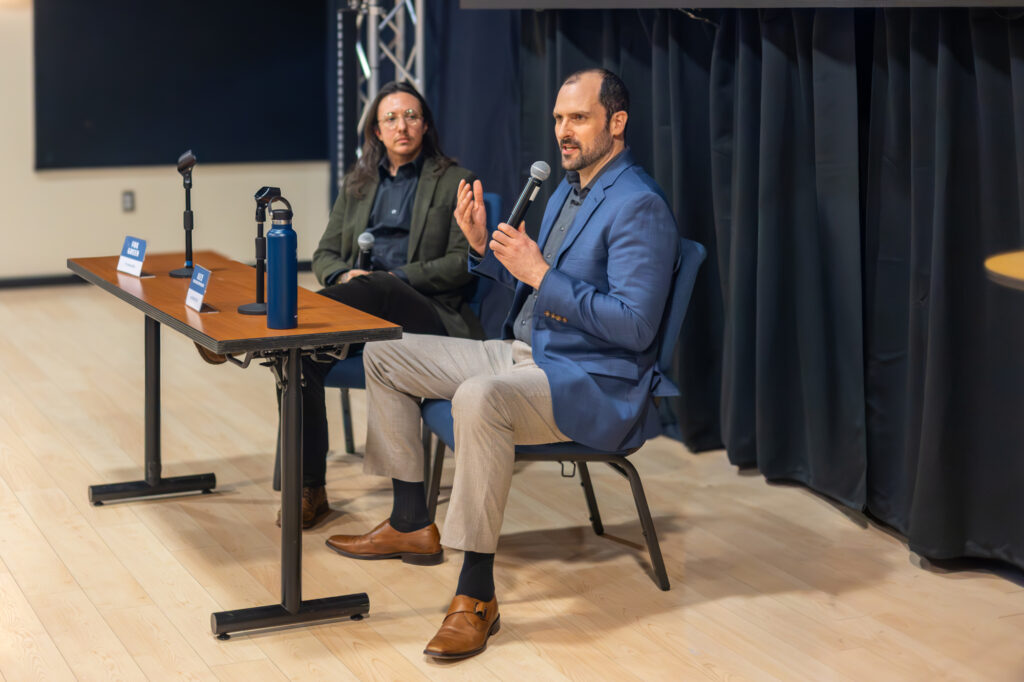
“You can’t tell the sun to shine or the wind to blow when demand spikes. The grid needs sources you can turn on, especially in winter.”
– Alex Panagiotopoulos, New York Energy Alliance
The Physics of the Grid
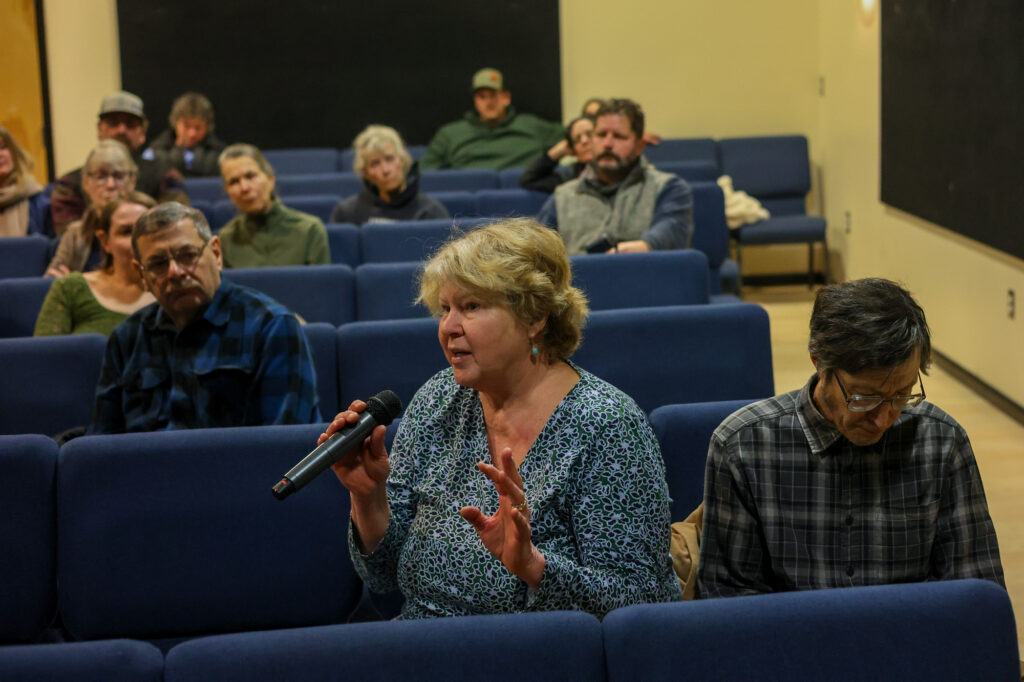
“I worked at the Blenheim-Gilboa Pumped Storage Plant. The only way it works is with nuclear power. Once Indian Point closed down, it cost more to generate power.
And talking about hydroelectric, the director of REA, which is the electric co-op, wanted to put a generator onto the Pepacton Reservoir at the dam. What happened to that? You’ve got the water, you’ve got the power. So that’s a political question that needs to be looked into. Where are our tax dollars going to support that?”
– A retired energy worker
Rules for Thee, But Not for Me
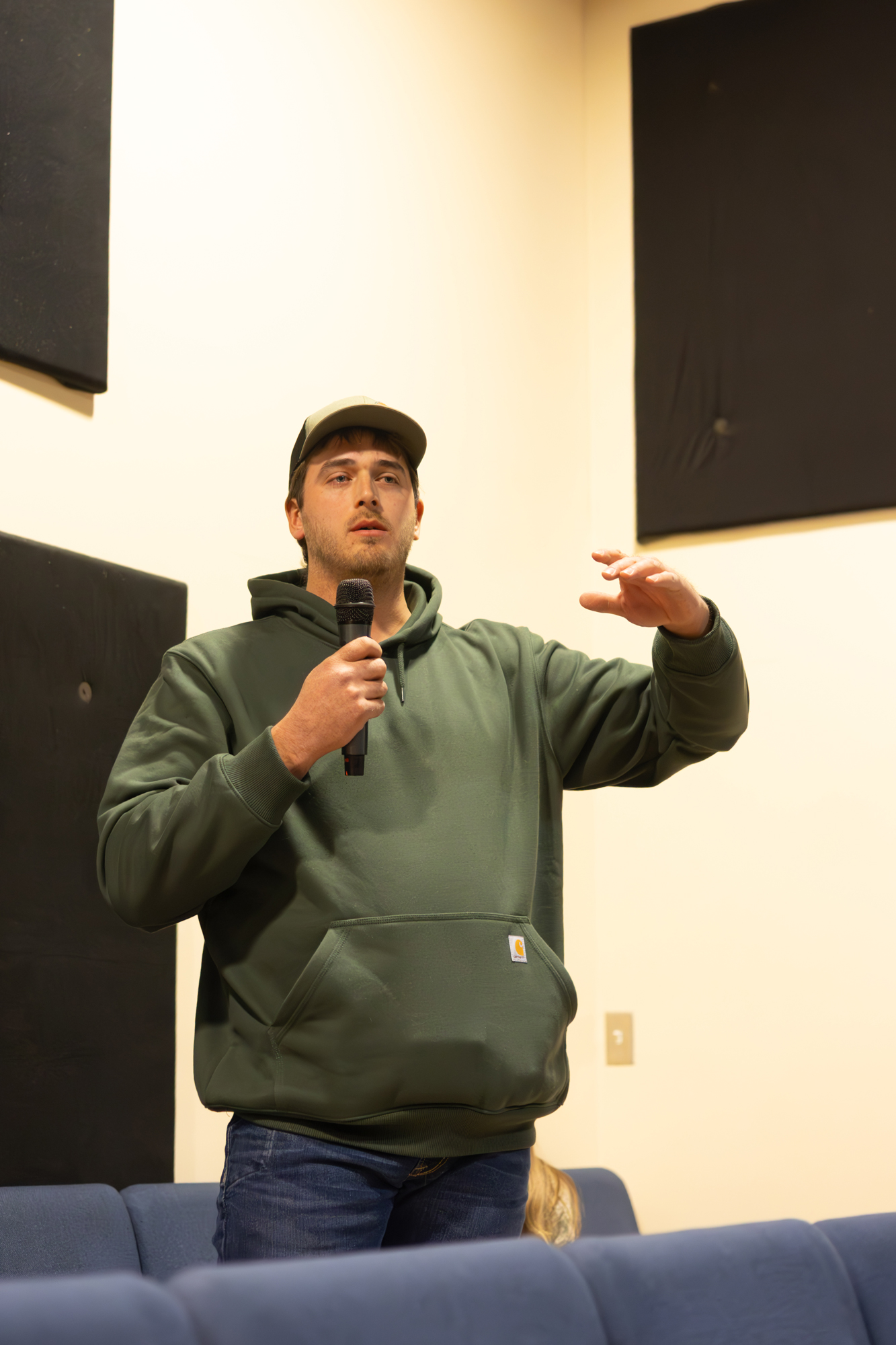
“It took us four years and at least 50 phone calls to get a lease for agricultural purposes to tap maple trees on land next door to us. The New York City Watershed’s inability to get stuff done is phenomenal. But now they’re talking about building renewable resources on their land? DEP shows up and tells a friend to stop excavating because of runoff, while city utility crews are running three-foot deep trenches of mud all the way down the mountain. As soon as it’s them, it’s fine.”
– A local business owner and farmer
Scarcity Is a Choice
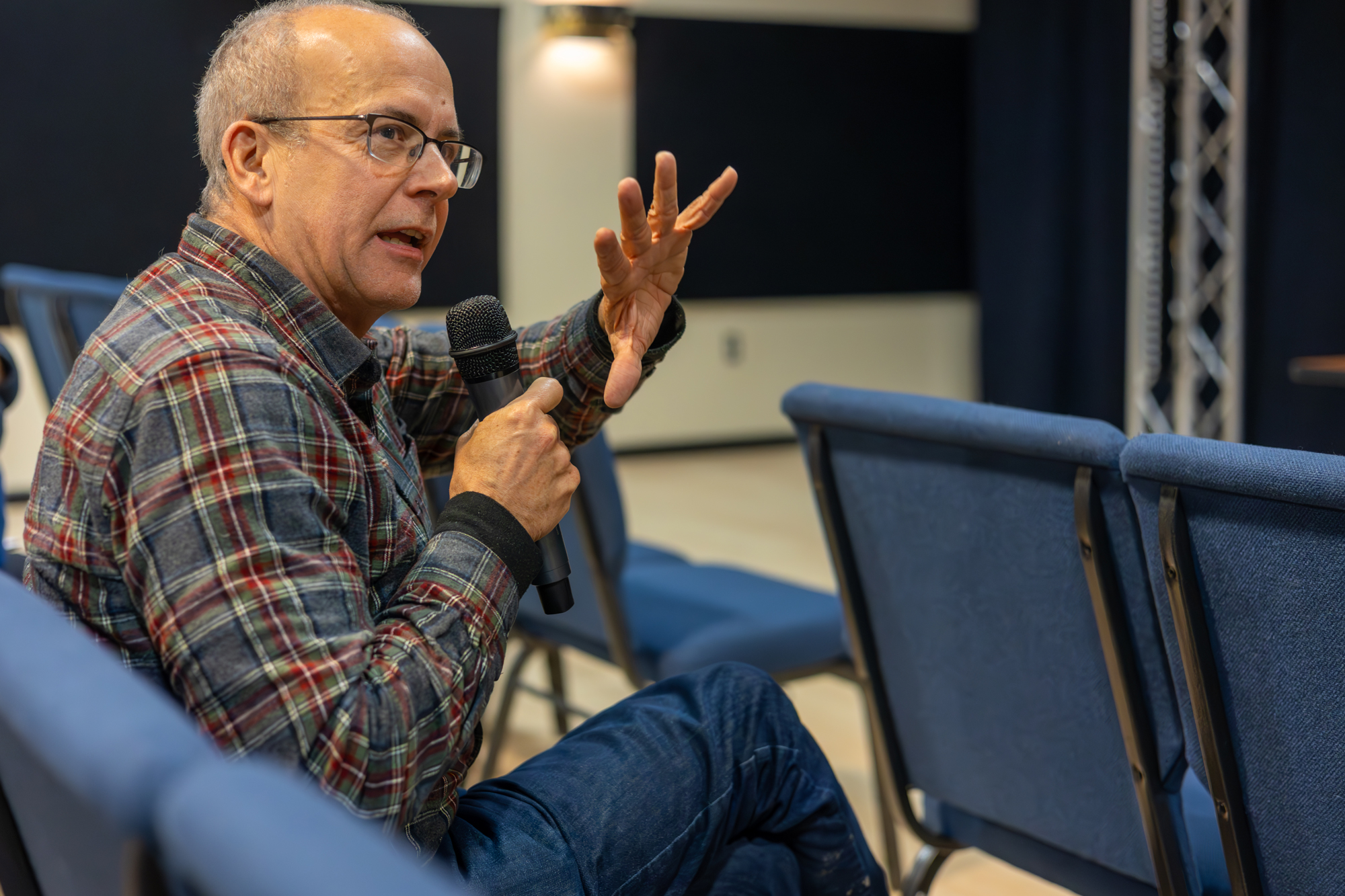
“Nothing ever gets built. There’s no economic development, and consequently we live in stunningly poor areas.”
– A retired electrical engineer
Is It Going to Stop?
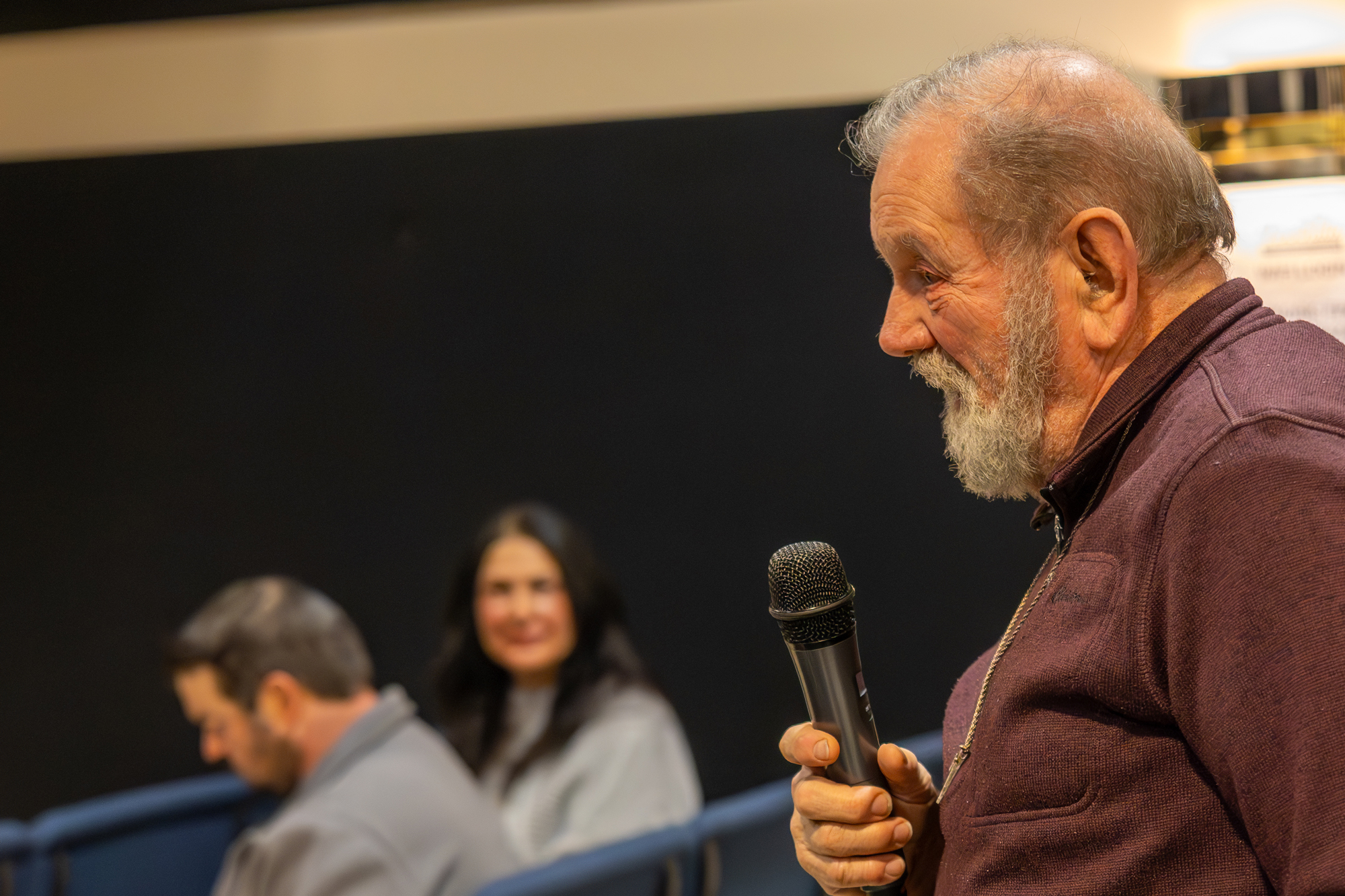
“I’m concerned about Delaware County and New York City and its infringement upon a lot of our lifestyles, our lives, our economy. I lived it. I’ve been through it. I watched both dams be built. I watched the acquisition of property. Your film is great and I thank you for it.
…
Now as your history lesson shows, New York City has oppressed Delaware County for so many years. My concern is, is it going to stop or is that going to be status quo from now on? Are we going to continue to live under the oppression of New York City?”
– A pastor
Local Control Matters
“The one thing with the Office of Renewable Energy Siting (ORES) is the lack of control that local municipalities have. Even when we offer suggestions, they can override it.”
– A county planner from the Adirondacks
Why People Came Anyway

“I’m glad we’re all here, sitting in a room together, discussing. That sure beats throwing bombs out on a phone.”
– A local resident
What’s Next?
The event in Oneonta made something visible: anywhere people are actually allowed to speak openly about energy, water, and land, the conversation can quickly move beyond “solar good versus solar bad.” It becomes a discussion about the future of the Catskills as a place where people live, work, build, and raise families.
More screenings are being scheduled across the state in 2026. Wherever these conversations take place, the goal remains the same: to insist that development in New York can both uplift and equalize humankind. We hope to see you there.
Make sure that you don’t miss the next screening by signing up for our email list on the footer of our website.
Thank you to Irina Zollars for the wonderful photos.